Remembering Dr. Carter G. Woodson, founder of Black History Month, 100 years later
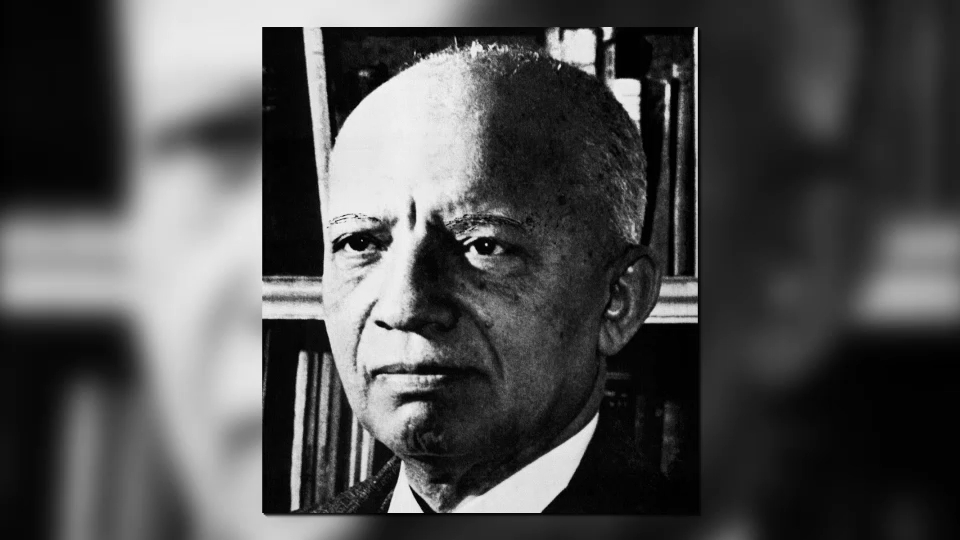


NEW YORK (WABC) -- Underneath the melting snow is a deep history tied to the person responsible for remembering and honoring African American history.
Exactly 100 years ago this February, Dr. Carter G. Woodson, a historian, author, journalist and educator, launched Negro History Week.
"He's the founder of Black History Month," said Dr. Jervette R. Ward, chair of the Black Studies Department at the City College of New York.
"I can only imagine what it was like for Woodson in 1926 to say I want to create a Negro History Week, because it starts as a week and grows into a month."
Dr. Ward says Woodson made sure that those who paved the way in the past would be etched into history.
"We have our King's, our Malcolm's, our Coretta's, our Rosa's, sometimes our Ida B.'s, but Carter is the one that said make sure you remember all of them," she said. "He's the one that says they matter."
Born in 1875 in Virginia as the child of enslaved parents, Dr. Woodson went on to become the second person of African descent to earn a PhD from Harvard University after W.E.B. DuBois.
"It's always inspiring to learn about people whose grassroots effort take fire," said Brian Jones, senior director of reading and engagement at the New York Public Library and a board member of the CUNY Graduate Foundation.
Jones says there were attempts to deny Woodson's experience.
"There is a way in which Black history in his experience coming up in the profession was completely denied, obscured, censored, whitewashed, and if it was told, it was told in demeaning ways that were about justifying the pervasive violence against Black people," Jones said.
So, Dr. Woodson helped start an organization called the Association for the Study of Negro Life and History and the Journal of Negro History. Both still exist in the present day to debunk myths and document truths about African American history and culture.
Woodson would later launch Negro History Week.
"He starts mailing to teachers to help them prepare for Negro History Week. He starts sending them posters and flyers and timelines, facts they could hang up in their classroom and resources to teach with," Jones said.
Jones says it wasn't until decades later when President Gerald Ford officially extended Negro History Week to Black History Month, keeping it when Woodson started it in February.
"He chose it because it was when it was the month that had the coincidence of Abraham Lincoln's birthday and the birthday that Fredrick Douglas chose for himself," Jones said.
Woodson's impact and legacy spans across New York City, including in Brownsville, Brooklyn, where a children's playground was named after him. P.S. 23 Elementary School in Brooklyn is also named after Woodson.
Meanwhile, original documents tied to his work are on display in Harlem inside Columbia University and the Schomburg Center for Research and Black Culture.
"He has connections with Langston Hughes, who of course is considered a son of Harlem, and of course Hughes wrote for some of Carter G. Woodson's publications," Dr. Ward said.
So where does Black History Month go from here?
"Where do we go from here? We make sure we don't repeat the worst parts of our history. We make sure that we look to our past so that we can create a better future," Dr. Ward said.