Only 1 in 5 Hispanic adults has ideal heart health, according to American Heart Association study



As Hispanic and Latin American Heritage Month begins, a new report from the American Heart Association is drawing attention to urgent cardiovascular health concerns among Hispanic adults in the United States.
The study, released this week, identifies a troubling reality: cardiovascular disease is now the leading cause of death among Hispanic adults. Researchers point to a complex web of social, economic and environmental factors contributing to these health disparities, including limited health coverage, food insecurity and language barriers.
Just one in five Hispanic adults in the U.S. has ideal heart health, the American Heart Association found.
"It is unfortunately not surprising," said Dr. Amol Bahekar, an interventional cardiologist who has served the Sandhills community for nearly 14 years. Bahekar said the study's findings reflect what he typically sees in his practice.
"There is unfortunately a high proportion of obesity in the Hispanic population. That is a large proportion of these patients tend to be diabetic. And a large proportion of these patients tend to be hypertensive," Bahekar said.
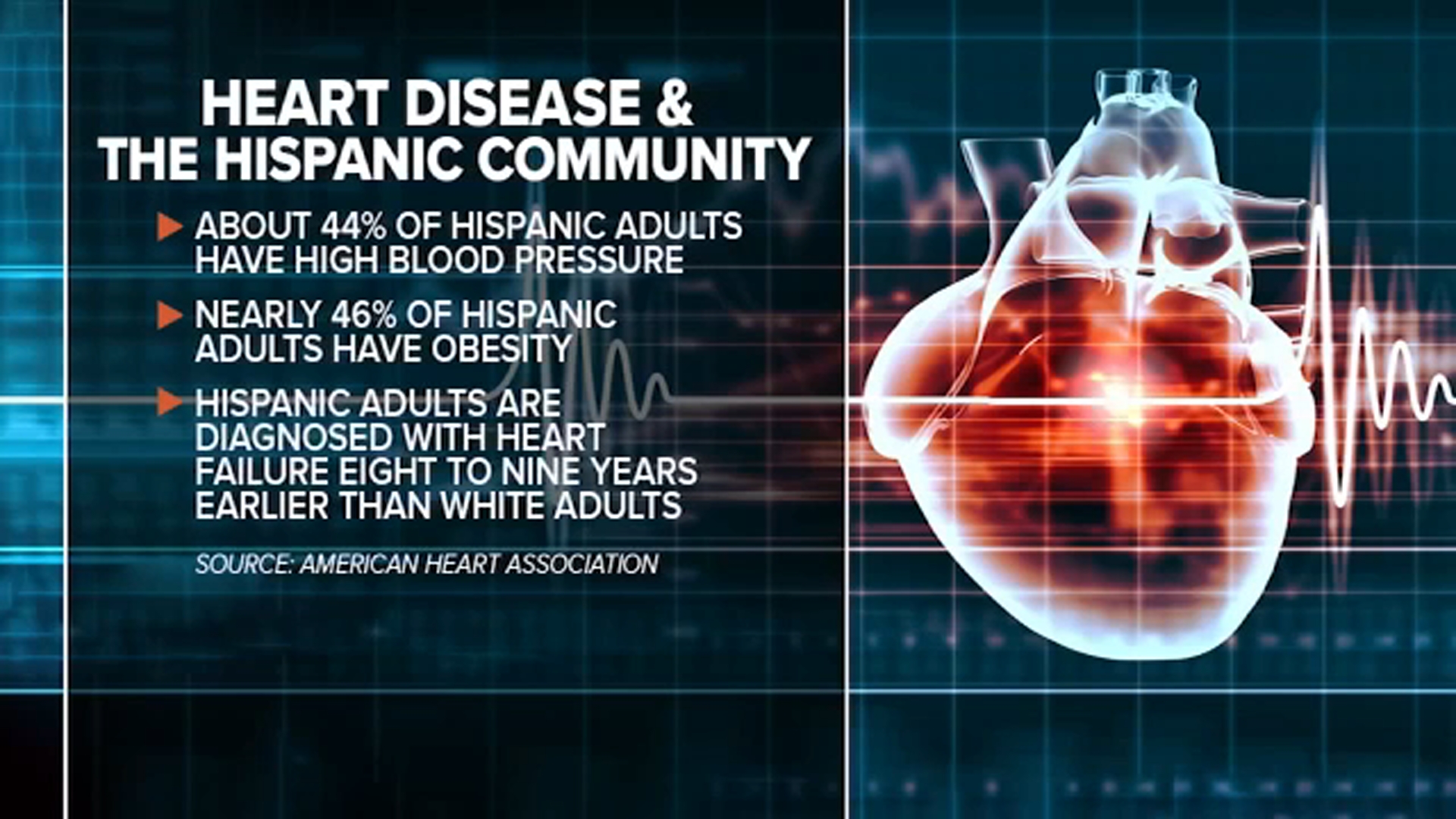
By the Numbers
- Type 2 diabetes affects 15.5% of Hispanic adults, nearly double the rate seen in white adults
- High blood pressure is present in about 44% of Hispanic adults, with rates peaking among Puerto Ricans, Cubans and Dominicans
- Obesity impacts nearly 46% of Hispanic adults
- Hispanic adults are diagnosed with heart failure eight to nine years earlier than white adults
- About one-third of Hispanic adults report getting less than seven hours of sleep per night, a factor linked to increased blood pressure
While there is no universal solution for Hispanic communities, Bahekar said small lifestyle changes can make a meaningful impact.
"Control the proportion and control the amount of sodium in your diet. So any added amount of salt, uh, can contribute to, you know, high blood pressure eventually and then can lead to heart disease," Bahekar said.
The study also emphasized that challenges extend far beyond the clinic.
Francisco Almodovar, a veteran who underwent triple-bypass surgery eight years ago, understands those challenges firsthand.
"I was in denial when it happened to me. There's no way this could be happening to me. I am in great shape," Almodovar said.
"You hear the doctor tell you what they're going to do, you know, cut you open and all that. You don't really comprehend that at first. So finally sunk in, I was a little nervous, terrified," he said.
Today, Almodovar is part of Mended Hearts of Fayetteville in North Carolina, a support group for heart patients and their families. He often helps bridge the language gap for Spanish-speaking patients.
"They are from Venezuela, Argentina, Peru, Colombia, you know and a lot of them, they just don't know the language. They just don't speak English at all," Almodovar said.
"They'll mention it or their loved one, whoever happens to be in the room, they don't speak English. So I ask them, you know, they speak Spanish and they say, yeah, so we just go down that road and you know, I just talk to them," he said.
Brenda Berkstresser, treasurer of Mended Hearts, Chapter 400 in Fayetteville, said the support group offers vital connection and firsthand experience for patients and families.
"You must be a heart patient of any kind to be a visitor. And we visit patients. We visit their families in the waiting room. In 2006, when I had my open-heart surgery, I thought I was the only person in Fayetteville with heart disease. You never heard anybody speak of it? We talk to people 1 to 1, and they see that they're not the only people with this heart disease. They find out things that may be, you know, since their doctors and nurses do not have heart disease, things that don't occur to them," Berkstresser said.
The American Heart Association's findings highlight the need for greater awareness and resource access in Hispanic communities.
"A lot of the Hispanic patient population don't have awareness of their heart and or heart disease and health conditions, they do not have access to healthcare that they deserve," Bahekar said.
Almodovar added, "The more information you have, the better your quality of life going forward can be."
As Hispanic Heritage Month continues, advocates hope increased attention will help drive solutions to improve heart health outcomes for Hispanic families across the country.
Resources
English
Mended Hearts HeartGuide in English