NHL teams' offseason keys, including free agency, draft needs

The 2026 Stanley Cup playoffs are underway, which means that while some teams are looking forward to their shot at the best trophy in sports, the others will be looking ahead to the offseason.
What went right and wrong for each of the eliminated teams? How should they modify their rosters this summer via trades, free agency and the draft? And what is each club's outlook for 2026-27?
Read on for full breakdown on every team that is no longer eligible to win the Stanley Cup in 2026. More teams will be added to this story as they are eliminated, so keep this page bookmarked.
Note: Profiles for the Atlantic and Metro teams were written by Kristen Shilton. Ryan S. Clark analyzed the Central and Pacific teams. Stats are collected from sites such as Natural Stat Trick, Hockey Reference and Evolving Hockey. Projected cap space per PuckPedia. Dates listed with each team are when the entry was published. Teams are listed alphabetically by publication date.
Jump ahead to a team:
ANA | BOS | BUF | CGY
CHI | COL | CBJ | DAL
DET | EDM | FLA | LA
MIN | MON | NSH | NJ | NYI
NYR | OTT | PHI | PIT
SJ | SEA | STL | TB
TOR | UTA | VAN
WSH | WPG

Eliminated in conference finals

May 29: Montreal Canadiens
Projected cap space: $9.2 million
2026 draft picks: 1st, 2nd, 3rd, 4th, 4th (WPG), 6th, 7th, 7th (CAR)
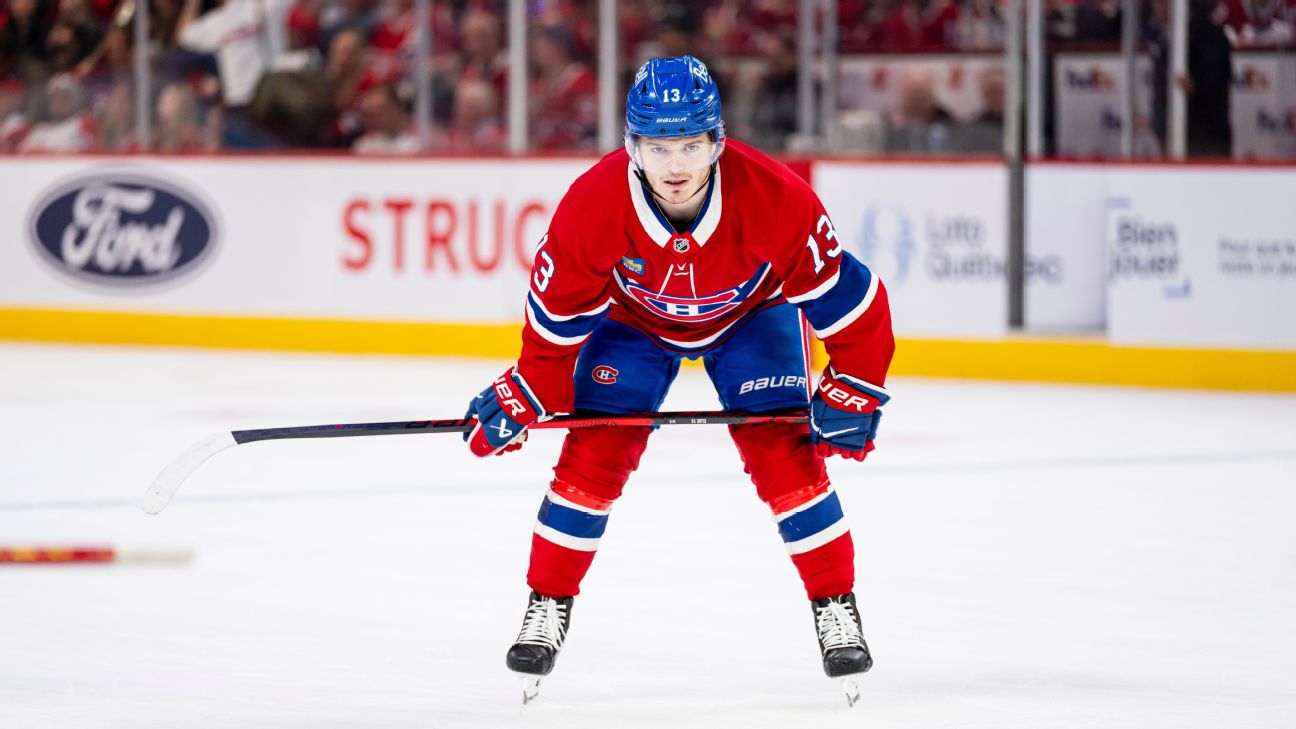
What went right? Montreal has a stable of undeniable stars who have fast-tracked the team from a rebuilding squad to an actual contender. Cole Caufield and Nick Suzuki hit historic heights this season: Suzuki's 101-point effort was the first triple-digit mark by a Habs player in 40 years, and Caufield was the franchise's first skater to hit 50 goals in 36 years.
Montreal also got the best out of rookie Ivan Demidov, an offensive threat out of the gate who turned out to be an excellent linemate to propel Juraj Slafkovsky to a career-high 73-point campaign. Jakub Dobes, another freshman, was a revelation in net, and Noah Dobson performed as advertised as an elite puck-moving defender whom Montreal was smart to steal from the New York Islanders last summer.
And let's not forget Lane Hutson, who showed zero signs of a sophomore slump with 12 goals and 78 points. The Canadiens are young, hungry and talented.
What went wrong?Montreal was in control of their own destiny briefly -- and then they kind of blew it. After fending off theTampa Bay Lightning in the first round, and then the Buffalo Sabresin the second, the Canadiens pounced on Carolina with a resounding 6-2 win in Game 1 of the conference finals to hand the Hurricanes their first playoff loss.
A good omen for Montreal, right? Not really. The Canadiens offense disappeared after a four-goal output in the opening 20 minutes of Game 1. Montreal was outshot 123-52 from the second period in that outing through Game 4 (including two games that went to overtime) and the series felt all but over when Carolina shutout Montreal 4-0 at home to put them on the brink of elimination in Game 5.
Speaking of Bell Centre -- the Canadiens inability to win there was always a serious problem. Montreal was 2-6 at home in the playoffs, compared to 7-3 on the road before arriving in Raleigh for Game 5 but even that luck ran out in the end. The Canadiens star power was seriously lacking against Carolina, too -- Nick Suzuki had three assists in Game 1, Juraj Slafkovsky had two goals and an assist and Cole Caufield had a goal and one assist -- the three of them combined for a single helper the next three games. Not ideal. The Canadiens have the rest of spring and summer now to pour over how to come back stronger next season.
Keys to the offseason: Montreal has to like where it is already, and there are no glaring issues to address at the moment. Patrik Laine will be an unrestricted free agent, while Kirby Dach, Zack Bolduc and Arber Xhekaj are restricted free agents.
The Canadiens will likely try to shore up their defense with more veteran talent. Montreal was 16th in goals-against average through the regular season (at 3.06), and although it's not a dire situation, there is room for improvement there to help support the younger talent. Bringing on a free agent who could boost the third pairing and add punch to a penalty kill that was in the bottom half of the league this past season would be a good place for GM Kent Hughes to start.
Then it's just a matter of filling in the gaps to ensure that when -- not if -- Montreal gets back into the playoffs, it has enough of a supporting cast to advance.
Realistic expectation for 2026-27: The Canadiens have all the makings of a team that will be a postseason regular for years to come. That's where you should find them again next spring.

May 26: Colorado Avalanche
Projected cap space: $3 million
2026 draft picks: 4th, 4th (CAR), 5th (BOS), 5th (PHI), 7th, 7th (NYR), 7th (OTT), 7th (PIT)
What went right? From the regular season through everything the Avalanche achieved through the opening two rounds of the playoffs, they looked every bit like a Stanley Cup front-runner.
They showed a sense of comfort in both playing in -- and winning -- tight games such as the ones against the Los Angeles Kings in the first round. They showed that they could make the necessary adjustments and win in a variety of ways, which was the case in the second round against the Minnesota Wild. This is how the Avs went into the Western Conference finals with only one loss in nine games this postseason.
What went wrong? To put it simply: Everything, once they faced off against the Vegas Golden Knights in the conference finals.
The challenges began with defenseman Cale Makarsitting out the first two games because of an injury. His absence forced the Avs into reconfiguring their defensive pairings before Makar returned in Game 3.
Although missing the two-time Norris Trophy winner had an impact, it wasn't the only issue. A prolific attack that was the best in the NHL in the regular season -- and was a challenge for opponents to contain in the playoffs -- encountered quite a few moments when it struggled in 5-on-5, 4-on-4 and on the power play. The Avs consistently held onto the puck (holding the advantage in shot share), but still succumbed to Vegas scoring quick-fire goals within five minutes of each other as they did in the first three games. An injury toNathan MacKinnonin Game 3 didn't help either.
Furthermore, they gave up a one-goal lead to lose Game 2, then built a three-goal lead in Game 3 before failing to score in the final 40-plus minutes to fall into a 3-0 series hole.
Keys to the offseason: Brent Burns and Brett Kulak are significant questions because they both have expiring deals. Their uncertain future creates the possibility the Avs might need to find a new third defense pairing, unless both re-sign with the club.
The big challenge facing the Avs is what they'll do to strengthen their supporting cast in a way that will make them pose a stronger threat than what they were in the conference finals. Some depth players such asRoss Colton are entering the final year of their contracts. It's possible they could elect to move on from those players to free up cap space for more help. Or, they could wait until the season begins to make the necessary adjustments based on early results.
Realistic expectation for 2026-27: The Avalanche are still in a championship window. But the impetus for next season is that it'll be the final year of Makar earning $9 million annually before he gets a new (more expensive) contract, which will present the Avs with more financial restraints going forward.
Eliminated in Round 2

May 18: Buffalo Sabres
Projected cap space: $12.9 million
2026 draft picks: 1st, 4th, 5th, 6th
What went right?The Sabres looked lost and destined to extend their historic playoff drought to 15 seasons when they were sitting 30th overall in the NHL with an 11-14-4 record on Dec. 8. GM Kevyn Adams was fired on Dec. 15 (and replaced by Jarmo Kekalainen). Somewhere in between -- on a road trip through Western Canada -- Buffalo bonded over "drinking beers,"according to Sabres captain Rasmus Dahlinand that might have helped flip a switch.
The Sabres ran off 13 wins in 14 games into the new year and finished the regular season from that point on with a league-high .784 points percentage (38-9-4) to grab top seeding in the Atlantic Division. In that 51-game stretch, Buffalo stood out in every category -- it ranked third in offense (3.71 goals per game), first in defense (allowing just 2.61 goals against), and leaned on an excellent goalie tandem of Ukko-Pekka Luukkonen and Alex Lyon (who ranked second and fifth, respectively, in save percentage among netminders with at least 20 starts).
Tage Thompson hit the 40-goal mark for a second straight season, Zach Benson collected career-best totals (with 13 goals and 43 points), blueliner Mattias Samuelsson was a standout at both ends of the ice, and all of Bowen Byram, Jack Quinn, Ryan McLeod and Josh Doan found significant roles.
Head coach Lindy Ruff is a Jack Adams Award finalist for a reason -- he took stock following Kevyn Adams' firing and found a way to get the best of this group -- to put Buffalo back into the postseason after a 14-year drought.
What went wrong? The Sabres did so much right in the regular season that their middling power play didn't stand out as an issue -- but it truly became one. Buffalo finished 21st overall with the extra man (19.5%) but the wheels truly came off in that department starting in the beginning of April. Buffalo went 11 straight games without a man-advantage goal (0-for-39) until Dahlin finally stopped the bleeding in Game 5 of their first-round series against the Boston Bruins. The Sabres' special-teams production was hit-or-miss after that. And they were truly abysmal at home (2-5) versus on the road (5-1) this postseason.
Buffalo's goaltending became a serious issue in its second-round series against the Montreal Canadiens, when Ruff had to toggle between Lyon and Luukkonen as both struggled to perform behind a Sabres team with increasingly lax attention to defensive details.
Buffalo's stars never came out consistently in the postseason, either. Thompson had just two goals in the first six games (one in an empty net), Tuch had zero points through six games, and overall their whole top line (with Peyton Krebs, who had a goose egg against the Habs going into Game 7) never found an offensive rhythm.
While Montreal appeared more powerful by the game, the Sabres were too often shadows of their former selves, as several key players got their first postseason experience.
Keys to the offseason: Kekalainen's first task will be nailing down an extension with Tuch. The pending unrestricted free agent will be a coveted player on the open market -- after producing 33 goals and 66 points during the regular season -- if he chooses to test it. Kekalainen will have to prepare an offer Tuch can't refuse if he intends to retain his top-line winger (with a potentially significant raise). Krebs and Benson are both pending RFAs in need of new deals as well.
Once Kekalainen handles that business, he can start to search for what the Sabres were lacking in the end -- suitable depth scoring, a little extra physicality and some defensive help (no shade on trade deadline pickup Luke Schenn, who stepped in as best he could late in the Montreal series). There are some intriguing names out there -- Rasmus Andersson, Anthony Mantha and Viktor Arvidsson among them -- who might just give Buffalo a bit of a boost to take another step next season with their young core well in place.
Realistic expectation for 2026-27: The Sabres aren't about to start another playoff drought. They'll be back.

May 14: Anaheim Ducks
Projected cap space: $40.5 million
2026 draft picks: 2nd, 3rd, 4th (PHI), 5th, 6th, 7th
What went right? The Ducks have built a team that blends a young, homegrown core with veterans who have won elsewhere. That all led to the Ducks taking a significant step forward in 2025-26.
Whether that step was going to include a return to the playoffs was the biggest question as the season went on. The Ducks made their first playoff appearance since 2018 and advanced to the second round for the first time since 2017, beating the two-time defending Western Conference champion Edmonton Oilers.
The Ducks are now among the teams ready to challenge the power structure in the Western Conference, perhaps a little ahead of when anyone expected them to do so.
What went wrong? The Ducks ran into one of the NHL's most dangerous trios in the second round. Mitch Marner's nine points through five games of the second round was the most of any player in that span of postseason games, and he's the leading overall scorer in the 2026 playoffs with 18 points through 12 games. Jack Eichel is tied for second with 15, andPavel Dorofeyevleads all playoff goal-scorers, with nine.
Cutter Gauthier and Beckett Sennecke were the only Ducks who averaged more than 0.70 points per game in the series entering Game 6. That's a contrast from the Golden Knights, who had four players who averaged more than 0.80 points per game against Anaheim. Although the Ducks showed offensive flashes, they were simply outmatched here.
Keys to the offseason: The good thing about having young talent? Those players provide the promise of a bright future at relatively team-friendly rates on their entry-level contracts.
The bad thing about having young talent? In the coming summers, those entry-level contracts will be expiring, and those players will need significant raises.
The challenge for the Ducks in the near future: Leo Carlsson, Pavel Mintyukov, Olen Zellweger and Gauthier are restricted free agents this offseason. Getting new deals done for them comes as the club has three veteran defensemen -- John Carlson, Radko Gudas and Jacob Trouba -- who are hitting unrestricted free agency. There is a lot of projected cap space, but it could be tricky to keep everyone.
Realistic expectation for 2026-27: The Ducks are now officially among the ranks of expected playoff teams and should be pushing to at least get back to the second round next spring, if not further.

May 13: Minnesota Wild
Projected cap space: $13.5 million
2026 draft picks: 3rd, 4th, 5th, 5th (SJ), 6th
What went right? A team that had been a perennial first-round exit leveled up in 2025-26 to stake a serious claim within the Western Conference hierarchy.
The Wild won the Quinn Hughes sweepstakes, which signaled that they were serious about trying to make a push for a Stanley Cup, whether it be this season or in the near future.
Hughes' addition brought several new elements to the Wild, and the club showed off its new firepower in preventing the Dallas Stars from reaching a fourth consecutive Western Conference finals, ousting them with a dominant performance in the first round.
What went wrong?"Within reach, while struggling to gain a firm grasp" is the best way to describe the Wild's second-round series against the Colorado Avalanche. It happened in Game 1; they overcame falling into an 0-3 hole to eventually take a 5-4 lead before losing by three in a wild series opener. In Game 2, the penalty kill allowed two goals in a 5-2 defeat, before Minnesota rallied for a 5-1 win in Game 3.
Then there was Game 4, when they staved off pressure to tie the game at 2-2 ... only to allow the Avs to tally the go-ahead score on Parker Kelly's first career playoff goal, and add two empty-netters thereafter. Colorado was simply able to counterpunch Minnesota at each step of the way.
Keys to the offseason:GM Bill Guerin and his front office will need to navigate an eight-player UFA class featuring Nick Foligno, Marcus Johansson, Vladimir Tarasenko and Mats Zuccarello, among others.
After that, the Wild should consider adding more top-six help. Once again, the Wild are playing with limited cap space because Kirill Kaprizov's new contract will raise his cap hit from $9 million annually to $17 million annually.
Realistic expectation for 2026-27: The Wild will be right there with the other top Western Conference contenders, and should be challenging for their first trip to the conference finals since 2003.

May 9: Philadelphia Flyers
Projected cap space: $39.5 million
2026 draft picks: 1st, 2nd, 3rd, 6th, 7th
What went right? It seemed implausible in October that Philadelphia would be a nearly 100-point team, and earning its postseason ticket for the first time since 2019-20. That's why they play the games, right?
The Flyers exceeded expectations for a number of reasons, from goaltending on out. Dan Vladar had his best season ever with a 29-14-7 record, 2.42 goals-against average and .906 save percentage, which was top 10 among goalies making 40-plus starts. Vladar wasn't the only one with a breakout campaign. Trevor Zegras -- in his first season with Philadelphia following an offseason trade from Anaheim -- set a career high in goals (26) and points (67), while Noah Cates put up his best numbers too (18 goals and 47 points) while Owen Tippett led all Flyers with 28 goals to match his own top total from two seasons ago.
Coach Rick Tocchet's newly implemented, defense-forward structure seemed to steady the Flyers and help them rank ninth in goals against during the regular season, and made them one of the stingier clubs in the postseason as well. Despite being tied as the second-youngest team overall in the playoff field (with an average age of 27) and dressing eight players under age 25 -- three among them who didn't start the season with Philadelphia -- the Flyers surged through their second half with the league's fourth-best winning percentage (.712) out of the Olympic break to earn their spot in the postseason.
The Flyers were in full control for much of their first-round Eastern Conference series there against the Pittsburgh Penguins, taking the first three games and eventually ousting their state rivals with a tight 1-0 overtime victory in Game 6. Philadelphia showed they are finally starting to crack the ceiling on this team's potential.
What went wrong? Philadelphia wouldn't have been in the playoffs at all without the contributions of their young skaters -- but the lack of postseason experience that started hurting them late in the first round was further exposed against the high-flying Carolina Hurricanes. A team like Carolina will make its opponent pay for every mistake, and that is part of how the Hurricanes halted any of the Flyers' momentum and seemingly deflated their confidence.
But again, Philadelphia's struggles -- particularly offensively -- first bubbled up when they had Pittsburgh on the ropes with a 3-0 series lead. The Flyers scored just five goals in the three games prior to advancing, and then tallied just three goals in their first three outings against the Hurricanes (with zero scores coming from Christian Dvorak, Travis Konecny or Matvei Michkov). Injuries to Tippett and Cates only exacerbated the team's scoring problems. Philadelphia's power play -- a season-long issue for the club -- was operating at just 4.3% over that stretch, too.
Frederik Andersen is light-years ahead of Penguins' netminders Stuart Skinner and Arturs Silovs, and while Vladar performed especially admirably given the Flyers' circumstances, he couldn't quite match how Andersen was protecting the Canes' crease. This season should still be viewed as a win overall for the Flyers. It's a massive steppingstone toward being a perennially competitive group again, and there's no doubt they'll learn from taking a few lumps.
Keys to the offseason: The Flyers are in a good spot. GM Danny Briere's first priority will be negotiating Zegras' next contract. He's a pending restricted free agent at the top of his game, and that's going to cost Philadelphia -- but the fit between team and player has been so strong that both sides will want to get something done. Defenseman Jamie Drysdale is another RFA who Briere will be motivated to keep following his best season in years.
Then there is backup goalie Samuel Ersson. He's an RFA too, but without Zegras or Drysdale-like proficiency to support his cause (Ersson was 14-11-5 with an .870 SV% playing behind Vladar this season).
Philadelphia has cap space to spare, so once Briere is done with his in-house work, he can figure out how to help Philadelphia continue its evolution. If Ersson isn't coming back, who will the Flyers' go with as their No. 2 (assuming Vladar returns to form as their go-to next season)?
Then it's time to fix the team's awful power play, which finished 32nd in the regular season, at 15.7%. Some sort of upgrade/overhaul has to happen. How Briere chooses to address that -- via a coaching change or personnel addition -- will have a notable effect on the Flyers next season.
Realistic expectation for 2026-27: Philadelphia showed enough in the past nine months to put itself firmly in the 2027 playoff conversation from opening night onward. And realistically, when the Flyers do get to the postseason, absolutely no one should be surprised if they make a longer run than this one.
Eliminated in Round 1

May 3:Tampa Bay Lightning
Projected cap space: $13.6 million
2026 draft picks:2nd, 3rd, 5th, 5th (SEA), 6th, 7th
What went right? The Lightning showed once again why they've been a perennial powerhouse over the past decade. Head coach Jon Cooper, the league's longest-tenured bench boss and 2026 Jack Adams finalist, consistently manages to bring out the best from his team. The Lightning produced an impressive 109-point regular season, finished second in their division and secured a ninth consecutive playoff berth.
Per usual, it was the elite offensive performance of Nikita Kucherov -- second in league scoring with 44 goals and 130 points -- that helped put the Lightning in such prime position, with Jake Guentzel (38 goals and 88 points) and Brandon Hagel (36 goals and 74 points) producing as well. Andrei Vasilevskiy was top-tier in a Vezina Trophy-worthy campaign (.912 SV%, 2.31 GAA), aided by a strong defensive front led by the emergence of J.J. Moser (with a career-high seven goals, 29 points and plus-44 rating) and veterans Ryan McDonagh and Victor Hedman. All told, Tampa Bay finished fourth in offense (3.49 goals per game) and third in goals-against (2.79) and had the third-best penalty kill (82.6).
What went wrong? Too many of Tampa Bay's regular-season standouts went silent in the playoffs. The Lightning had play their entire first-round series against Montreal without Hedman. What Tampa Bay didn't need was players in the lineup to be noticeably invisible at key moments. Kucherov and Brayden Point each scored just one goal and Guentzel had two. Hagel was pulling his weight (with six goals and eight points), but his efforts couldn't make up for the rest of the club's deficiencies as the Lightning ranked in the bottom six in playoff scoring (with fewer than three goals per game).
Would having Hedman have made a significant difference? He's an all-world defenseman, so probably. But Moser and McDonagh were still strong. It was just that the Lightning appeared less cohesive as a group against the Canadiens than they did throughout the year. The number of overtime games in the series also played a factor -- the Lightning were one timely goal or save away from victory in their first three outings -- but that's what separates teams in the spring. On any given night, who gets the job done? On too many occasions it just wasn't Tampa Bay, and so the Lightning bowed out in the first round for the fourth straight season.
Keys to the offseason: The Lightning are mostly locked in with regards to their own talent -- onlyDarren Raddysh's expiring deal stands out following his career-best season (22 goals and 70 points in 73 games). Otherwise, Tampa Bay has all the players in place to stay a top contender in the Eastern Conference. But will Father Time catch up with the Lightning? Hedman and McDonagh are both over 35, and Kucherov, Point, Guentzel and Vasilevskiy are in their early 30s. Critics have said before that the Lightning's window is closing, and at some point that will be true.
How will Tampa Bay make the most of the best years their top skaters have to offer? It's a question that should be consuming GM Julien BriseBois. It's hard to nitpick what the Lightning accomplished in the regular season, and analyzing only those games, it doesn't appear they have glaring holes. Perhaps it's more of a mindset shift that Tampa Bay should be chasing. Why did some of the team's major talents go dormant against the Canadiens? Is it the long-term fatigue of a decade's worth of extra games under the belt catching up to the Lightning? Or do they require an injection of new life? Could BriseBois work his magic to get someone likeCharlie Coyle or Alex Tuch in the mix to add offense and some fresh energy?
Realistic expectation for 2026-27: Tampa Bay will be back in the playoffs -- the only question is, can they advance to the second round (or beyond) for the first time since losing in the 2022 Stanley Cup Final?

May 1:Utah Mammoth
Projected cap space: $14.3 million
2026 draft picks: 1st, 3rd, 3rd (CAR), 4th, 5th, 5th (CHI), 7th
What went right? In a word? Progress. Last season, the Utah Hockey Club finished seven points shy of reaching the postseason. Teams on the bubble can go one of two directions in the following campaign. Utah's approach to making sure it had a better postseason shot included adding JJ Peterka to a group that already had Logan Cooley, Lawson Crouse, Dylan Guenther, Clayton Keller and Nick Schmaltz.
Those six played a role in why the Mammoth had 10 players who reached double figures in goals. But it wasn't just the core. The Mammoth got contributions from others such asMichael Carcone (16 goals) and Kailer Yamamoto (13). They had five defensemen who finished with more than 20 points, while goaltender Karel Vejmelka won a career-high 38 games while starting 63 times.
GM Bill Armstrong bolstered the roster at the trade deadline, adding MacKenzie Weegar on the blue line, who helped the club attain consistency in a chaotic Western Conference wild-card race.
What went wrong? Taking a 2-1 series lead in the first round against an experienced group like the Vegas Golden Knights answered quite a few questions about the Mammoth's young core in its first postseason. That's what made how their series ended complicated. They were an overtime win away in Game 4 from taking a 3-1 lead. They were another overtime win away in Game 5 from having a 3-2 lead.
Instead, the Golden Knights won both games in overtime, taking a 3-2 series lead against a team that was trying to figure out a few issues. One of those issues: trying to regain the defensive consistency they had in Games 2 and 3. The Mammoth allowed two goals in those games, both victories. In their losses, they allowed four or more goals.
Another concern facing the Mammoth was how Peterka, who was fourth on the team in goals in the regular season, was held without a point through all six games of the series.
Keys to the offseason: They have decisions to make about veteran UFAs such asIan Cole, Alexander Kerfoot, Kevin Rooney, Kevin Stenlund, Vitek Vanecek and Yamamoto. Their cap situation is only going to amplify the need for them to add veterans at team-friendly rates if they feel can contribute toward another playoff run.
Then there's the discussion about whether it's time for top prospects Tij Iginla and Caleb Desnoyers to hit the NHL ice. Iginla, 19, who was Utah's first-round pick in 2024, finished the WHL regular season with 41 goals and 90 points, and he scored 12 points in nine playoff games for Kelowna. Also 19, Desnoyers scored 78 points in 45 games for Moncton of the QMJHL, and has added 15 points through 12 playoff games.
Realistic expectation for 2026-27: They'll once again be in the collection of teams fighting for a playoff spot in a crowded Western Conference and are one of the teams that is shifting the power dynamic.

May 1: Boston Bruins
Projected cap space: $16.4 million
2026 draft picks:1st, 2nd, 3rd, 4th, 4th (DET), 4th (TB), 7th
What went right?Into late December, the Bruins were hovering near the .500 mark, and it wasn't clear whether they'd repeat as playoff no-shows or bully their way back into postseason conversations. The Bruins did the latter, reeling off 11 wins in 14 games through mid-January to eventually secure a playoff spot. It took a renewed consistency from the Bruins' second- and third-line skaters, including Casey Mittelstadt, Pavel Zacha and Viktor Arvidsson, to get Boston on a roll, complementing the team's other strong points.
Jeremy Swayman bounced back from his own down year in 2024-25 to carry the Bruins in net, with a 31-18-4 record and .908 save percentage. Two players acquired at the 2025 trade deadline also blossomed: Fraser Minten collected 17 goals in his first full season with the Bruins, andMarat Khusnutdinov added 15. Tanner Jeannot was productive in his inaugural year with the club, Lukas Reichel proved to be a good 2026 trade deadline pickup, and 2025 first-round pick James Hagens got some regular and postseason experience under his belt.
Overall, it was a solid showing from first-year NHL coach Marco Sturm, guiding the Bruins to their familiar post as playoff stalwarts.
What went wrong? The Bruins got into the postseason but too often looked like they didn't belong. The Buffalo Sabres bullied the B's out of the playoffs in six games, and the Sabres did it multiple ways: They erased a multigoal deficit in Game 1, came from behind to take Game 3, blew Boston out in Game 4 and finished the job in Game 6. It was supposed to be Buffalo's inexperience being exposed after a 14-year drought, not the Bruins admitting embarrassment by their own poor performance. Boston's secondary scoring was MIA for much of the series, their power play was lukewarm at best, and they were increasingly bad defensively.
The Bruins' top players -- other than Swayman -- were neutralized in frustrating fashion, too. David Pastrnakhad three goals, Arvidsson had two, Zacha had one and Middlestadt and Charlie McAvoy had none. It was Pastrnak's overtime winner in Game 5 that gave the Bruins a shot at redemption in their building following the blowout 6-2 defeat in Game 4, but Boston again couldn't take advantage of the home cooking. Buffalo made adjustments where the Bruins did not. That speaks as well to how green Sturm still is compared to Sabres coach Lindy Ruff.
Keys to the offseason:Boston will need to handle its own business first in negotiating with pending restricted free agent Reichel and unrestricted free agent Arvidsson before GM Don Sweeney goes in search of adding to the roster.
The Bruins had admirable contributions from their forwards in the latter half of the regular season -- Morgan Geekie led the way with 39 goals, and Arvidsson, Pastrnak and Zacha eclipsed the 25-goal mark -- but the way Boston was exposed in the playoffs speaks to what Sweeney has to fix. The Bruins need their third and fourth lines to do more than just generate energy; they have tofrequently appear on the scoresheet more often as well.
Sweeney has to be thinking ahead this summer too -- Middlestadt, Zacha and Sean Kuraly will be entering the final year of their contracts. Is Sweeney prepared to run it back before making some significant alterations? Boston's focus, one way or another, has to be on limiting those high-danger chances that were so costly in the postseason. Anyone the Bruins key on should bring the physical play style and strength the team got away from. A player like Mason Marchment, a pending UFA who can battle in the corners and score 20-plus goals, would make sense.
Realistic expectation for 2026-27: The Bruins' core gives them a solid chance of being postseason contenders again. Entering the year with a chip on their shoulder won't hurt, either.

April 30: Edmonton Oilers
Projected cap space: $16.5 million
2026 draft picks:2nd, 3rd, 6th, 7th
What went right?For a team as top-heavy as the Oilers, depth scoring is always a need. The contributions from Jack Roslovic and Matt Savoie helped when it came to finding that secondary scoring this season.
Another positive development this season was the path that took Connor Ingram from being an AHL call-up to providing the Oilers with some of the most consistent goaltending they received in recent seasons.
Also noteworthy is that they went 6-2-2 over the final 10 regular-season games to make the playoffs, even as Leon Draisaitl was sidelined with a lower-body injury that forced him to miss the final 14 games of the regular season. However ...
What went wrong? Let's start from the beginning. Signing Andrew Mangiapane was the major free agent move last offseason for a cap-strapped team. He was eventually waived and then traded ahead of the deadline.
With goaltending a concern again, the Oilers traded Stuart Skinner for Tristan Jarry in December -- only to then change course by turning to Ingram. Regardless of who was in the crease, the Oilers had the worst team save percentage in 5-on-5 play. That was further compounded by a defensive structure that struggled for consistency.
All of those issues generated concerns about whether the Oilers would be good enough to advance to a third consecutive Stanley Cup Final. But they didn't even get close, as they were bounced in the first round by an Anaheim Ducks team that looks to be ascending into the crowded field of Western Conference powers.
Keys to the offseason:After signing a contract extension this past preseason, Connor McDavid is under team control through 2027-28. So, how do the Oilers build the strongest team possible in what could be McDavid's final seasons in Edmonton? That's really the only question that needs to be answered. It's not to say there aren't other concerns -- because there are. But those concerns also are connected to that larger and rather looming question.
Once again, the Oilers will be trying to find help at team-friendly prices. One way they could solve those issues is to move on from one of those larger non-Draisaitl or non-McDavid contracts.
The Oilers have had the desire to be creative in the past. It's just that this offseason might force them to take a different approach, given what's at stake.
Realistic expectation for 2026-27:Another trip to the playoffs is the bare minimum. If the front office gets creative with a big swing, that must be weighed against the long-term impact.

April 30: Dallas Stars
Projected cap space: $11.1 million
2026 draft picks:2nd, 5th, 6th, 7th, 7th (TOR)
What went right?The Stars fired Peter DeBoer in the wake of a third straight Western Conference finals loss and hired Glen Gulutzan. Despite the change behind the bench, the Stars finished with a fourth straight season of more than 100 points. There were times when the Stars looked as if they might be the best team in the NHL, or at least one that could look comfortable challenging teams in that space.
They were a top-10 team in goals per game and finished second in fewest goals allowed per game. Dallas had nine players finish with 10 or more goals despite injuries to key players such asMatt Duchene, Roope Hintz, Mikko Rantanen and Tyler Seguin, who had a season-ending ACL injury in December.
Despite those injuries, other Stars players had breakthroughs.Mavrik Bourquewent from 25 points in his first full season to finishing with 20 goals and 41 points. Sam Steel's 12 goals and 33 points were career highs in both categories, andJustin Hryckowian emerged as a legitimate NHL regular, finishing with 14 goals and 30 points.
What went wrong? All the offensive options who paced Dallas in the regular season struggled in the postseason. Again.
Last year's conference finals defeat to the Oilers raised quite a few concerns about the Stars. There were the ones about Jake Oettinger after he was pulled for allowing two goals on his first two shots. But there was also a conversation to be had about why the Stars struggled to score goals themselves. They finished with four goals in their final four games en route to being eliminated.
Fast-forward to this year's postseason. Instead of reaching the conference finals, the Stars got knocked out in the first round. And in what's becoming a trend, the Stars lost Game 1 for the ninth time in their past 11 playoff series. Perhaps the most significant reason for their exit is the lack of goals that hindered them last year bleeding into their first-round series against the Wild. They'll finish the first round as a bottom-five team in goals per game.
But even that statistic is a bit misleading because it takes power-play goals into account. Nine of the Stars' 13 postseason goals going into Game 6 came on the extra-skater advantage. Their 5-on-5 struggles came under even more focus after their Game 5 defeat in which both goals came on the power play. Not only did losing Game 5 place them within a game of a first-round exit, but it also continued a stretch in which the Stars failed to score in 5-on-5 play for more than 215 minutes.
Keys to the offseason: Does Stars GM Jim Nill feel that now is the time to make significant changes with his roster? And if so, which players could be moved in order to help the Stars win the second Stanley Cup in franchise history?
Jason Robertson was the Stars' most consistent offensive player in the regular season and playoffs, and his performance comes as he's in the final months of his contract. He's a pending RFA who has one year remaining under team control before he would hit the unrestricted market. The asking price that Robertson -- or any player with his profile -- could command is expected to come with a rather high premium -- especially given the deals signed by fellow star wingers like Kirill Kaprizov and Mitch Marner last summer.
The Stars can make that work, but doing so would likely force them to shed salary elsewhere. And in an even more crowded Western Conference landscape year-over-year, they will need to improve around the edges as well.
Realistic expectation for 2026-27: They are still in a championship window, but windows aren't forever. The need to make moves to win now is certainly ramped up for Nill and his colleagues this offseason.

April 29: Pittsburgh Penguins
Projected cap space: $45.8 million
2026 draft picks: 1st, 2nd, 2nd (WPG), 3rd, 6th (NSH)
What went right? Pittsburgh proved to be a better offensive team than anticipated this season, and that's what put it back in the playoffs after a three-year absence. The Penguins ranked third overall in regular-season offense, averaging 3.54 goals per game.
Anthony Mantha -- in his first campaign with the club -- had a career-best showing with 33 goals and 64 points in 81 games, Sidney Crosby and Bryan Rust both scored 29 goals, andRickard Rakell and Evgeni Malkin were top-tier threats up front again. Plus, the midseason additions of Egor Chinakhovand Elmer Soderblom were excellent moves by GM Kyle Dubas, given how seamlessly they worked into the Penguins' forward group.
Pittsburgh's power play was an asset, finishing seventh overall at 24.1%. Pittsburgh's biggest flex might have been the way first-year NHL head coach Dan Muse performed in his new role. He didn't look intimidated as a freshman behind the bench, taking the Penguins from seventh last season to second this season in the Metropolitan Division. That alone is a sign of positive things still to come in Pittsburgh.
What went wrong? A strong offense and high-end specialty teams can mask other issues, namely, poor collective defense and substandard goaltending. Outside of Erik Karlsson and Parker Wotherspoon performing admirably in the regular season, Pittsburgh struggled to find an effective flow on the back end. Muse cycled through various options, but nothing quite stuck enough to lessen the load on that Karlsson-Wotherspoon pairing.
That wasn't the only reason Pittsburgh was ninth in goals against this season (giving up 3.15 per game). Its goalies were unreliable from the jump, with December addition Stuart Skinner (12-9-5 with an .885 SV%) and Arturs Silovs (19-12-8, .888 SV%) repeatedly bailed out by the Penguins' ability to outscore their mistakes.
That worked out fine for Pittsburgh's first 82 games. When they got to the playoffs -- and were taking on a fast, hungry Philadelphia squad -- the Penguins looked old and slow, and their offense dried up accordingly (Crosby, Mantha and Rakell all failed to score early in the series and that was an issue). By the time Pittsburgh's veterans were fully engaged, the Pens' were already down 3-0 in the series. No amount of experience makes that an easy deficit to overcome. The Penguins did stave off elimination twice to avoid a sweep -- a feat led by Crosby netting four points through Game 4 and 5 -- but Pittsburgh's defensive flaws and shaky goaltending were exposed and ultimately doomed their hopes of a long run through spring.
Keys to the offseason: The Penguins have been dipping their toe into a rebuild for a while. This is the time to decide if they're going all-in on that adventure.
Pittsburgh has four picks in the first three rounds of the upcoming draft. It could acquire more if Dubas decides to use the nuclear option and trade Crosby.
Remember, the 2025-26 season began with everyone pondering where the Penguins would trade Crosby so that he could chase another Stanley Cup. Now, the Penguins' captain has one year remaining on his contract, and it's no secret he doesn't want to spend these twilight years fronting a retool. Deciding whether to work with Crosby on finding a trade partner will be a defining choice for Dubas.
Dubas must also make a decision on whether Malkin -- a free agent pushing 40 -- will be welcomed back in Pittsburgh or left to pursue another contract elsewhere. Mantha is a free agent as well, and at age 31 will want his next contract to be both lucrative and somewhere that's competitive.
All that is to say: Are the Penguins ready to embrace a full-on rebuild, or are they going to try to parlay their unexpected success this season into one more run with their legendary core? That will dictate how Dubas & Co. attack the weeks and months ahead.
Realistic expectation for 2026-27: The Penguins couldn't hide what ails them when it mattered most, and without a serious overhaul (i.e., getting younger) the playoffs feel out of reach in 2027. However, many counted Pittsburgh out this season, and look where it wound up. If the Penguins do elect to run it back, they are a long-shot playoff contender at best, and more likely on the outside looking in next postseason.

April 26:Los Angeles Kings
Projected cap space: $18.5 million
2026 draft picks: 1st, 2nd, 2nd (CBJ), 3rd (WSH), 4th, 5th, 6th, 6th (COL), 7th
What went right?The Kings' goaltending and defensive structure were the major consistencies in a season that had its share of inconsistencies. Darcy Kuemper finished the regular season with a 19-14-15 record and .891 save percentage, andAnton Forsberg went 16-12-5 with a .910 save percentage. It was Forsberg getting the net in the postseason, and he was strong in defeat, with a .922 save percentage.
The Kings finished the regular season in the top three in team save percentage in 5-on-5 play. They were also in the top 10 or just outside when it came to shots allowed, scoring chances allowed and high-danger chances allowed. Having a proven formula to limit goals and shots helped them make the playoffs in the tight race for the final Western Conference wild-card spot. It's what also allowed them to stay within a goal for the majority of their first three games against the juggernaut Colorado Avalanche.
What went wrong? A fifth straight first-round exit is another sign that the Kings have both macro and micro concerns.
The overarching problem is they've yet to break through into the higher class of teams that can reach the second round consistently. The biggest reason for that inability to take the next step is the lack of goals, which placed even more stress on their defensive structure and goaltending.
L.A. averaged the fourth-fewest goals in the regular season (2.68) and was the only team in the NHL's bottom 10 in goals per game to reach the playoffs. Those struggles carried over into a postseason in which the Kings averaged 1.33 goals per game.
Keys to the offseason: It starts with whether they remove the interim tag from D.J. Smith or go in another direction for what would be their fourth head coach since 2024.
There are also the moving parts that come with Anze Kopitar's retirement. His absence leaves the Kings to decide who will be their next captain while also trying to find another top-six forward who can help them address their lack of goals. It's also worth noting that Kopitar was one of the league's top two-way centers, playing in a conference where most of the top contenders are exceptionally strong down the middle. Given the players set to hit free agency, filling Kopitar's shoes might be most easily accomplished via trade.
The Kings must also make decisions on players with expiring contracts. Deadline arrival Scott Laughton and fellow forward Andrei Kuzmenko are both UFAs, and defenseman Brandt Clarke is an RFA.
Realistic expectation for 2026-27:The Kings should be in contention for a playoff berth, with the reality that they'll once again face strong competition in doing so.

April 25: Ottawa Senators
Projected cap space: $17.3 million
2026 draft picks: 1st, 3rd, 3rd (FLA), 3rd (DAL), 4th (CBJ), 5th, 6th
What went right? Ottawa went from being tied for last place in the Eastern Conference in mid-January to making the playoffs. The Senators' defense was a strength all season, and coach Travis Green made the necessary tweaks -- such as changing who ran the team's penalty kill to take it from 31st in late January to top six in the league post-Olympic break -- to keep Ottawa on track.
Jake Sanderson established himself as one of the league's emerging elite defenders (and formed a strong pairing with Artem Zub). Tim Stutzle and Drake Batherson shone in terrific individual seasons, and Brady Tkachuk persevered through injury to remain a point-per-game player.
From Feb. 1 to mid-April, Ottawa owned the fifth-best points percentage in the NHL, was the fourth-best team defensively and was allowing the second-fewest shots against per game. The Senators could have let this season slip away, but they rallied through the adversity to give themselves some hard-won experience to lean on going forward.
What went wrong? The Senators' goaltending was poor to start the season -- so bad that they churned through five different goalies to land at a league-worst .864 team save percentage at the end of January. Supposed No. 1 Linus Ullmarkwas 14-8-5 at that point, with an .881 save percentage.
That collective failing in the crease made things tough on the Senators and necessitated that herculean effort to eventually make the playoffs. Perhaps it was that grind which made Ottawa's offense so impotent in the postseason. The Senators were shut out by Carolina in the opening game of their first-round Eastern Conference playoff series and managed just two goals in Game 2, one goal in Game 3 and two in Game 4 of the Hurricanes' sweep.
The Senators generated nearly 28 shots on goal per game, yet all those capable scoring threats -- Stutzle and Tkachuk in particular -- couldn't get anything to hit paydirt. It was a disappointing end for Ottawa, especially considering the excellent goaltending provided by Ullmark in the series, the team's superb penalty killing and its dialed-in defense.
Keys to the offseason: The Senators' core is locked in long term, and the only looming internal contract negotiations pertain to veterans such asClaude Giroux and Nick Cousins. That leaves general manager Steve Staios free to scour the open market for reinforcements.
Ottawa could use a top-four, right-handed defender to pair with Thomas Chabot (think a Colton Parayko type) and -- given its dwindling offensive production in the postseason -- a consistent scoring threat with versatility to slot throughout its top-six rotation.
There are other areas where Staios could look to add -- it's not like the Senators would say no to some bottom-six depth with a player like Viktor Arvidsson -- but Ottawa's success is going to stem from the continued growth of the key players already driving this franchise forward. There are unknowns for the team in terms of how the players it has invested in will continue to mature. It'll be on them to lead the charge and keep knocking on that door.
Realistic expectation for 2026-27: The Senators should be a playoff team again -- one that is too talented to waste half the year chasing the league. Expect Ottawa to come out swinging.
Non-playoff teams

April 14: Calgary Flames
Projected cap space: $19 million
2026 draft picks: 1st, 1st (VGK), 2nd, 2nd (NYR), 2nd (UTA), 2nd (OTT), 3rd, 3rd (VAN), 4th, 5th, 6th
What went right? The front office acknowledging reality. The Flames finished with more than 90 points twice during the four-year span in which they've missed the playoffs. That might have created a mixed message: Were they close to being a playoff team or was the postseason the object in the mirror that was closer than it appeared?
Moving on from Rasmus Andersson and Nazem Kadri in exchange for significant draft capital, it appears as if the Flames are about to embrace the full freight of a true rebuild rather than a retool on the fly. With eight picks in the first three rounds this summer, one of the best prospect pipelines in the league will get another big boost.
What went wrong?The Flames finished in the top 10 of most scoring chances allowed per 60 minutes and the most high-danger chances allowed per 60, which illustrates their defensive challenges. But the strongest image detailing how the Flames struggled to score? It was the fact that Kadri, who was traded to the Colorado Avalanche on March 6, was still tied for the team lead in points and led them in assists and power-play assists as of April 7.
Keys to the offseason: Let's say that the Flames are clear about their direction. What does that mean for their veterans?
Jonathan Huberdeau has four years left on a contract worth $10.5 million annually, but he has reached the 60-point mark only once in four seasons with Calgary. The Flames could also be facing major decisions with Blake Coleman, Morgan Frost and Ryan Strome all entering the final year of their contracts. Strome, who has 11 points in 15 games since being traded to the Flames, has the most expensive contract of the trio at $5 million. That could make it easier to move one or all of them in exchange for prospects or draft capital.
Realistic expectation for 2026-27:While having that elite prospect pipeline is great for the future, it appears the Flames are headed toward the short-term challenges that come with being in a full-on rebuild.

April 14: Chicago Blackhawks
Projected cap space: $40.2 million
2026 draft picks: 1st, 1st (FLA, if not in top 10), 2nd, 2nd (TOR), 2nd (NYI)
What went right?This season was the most promising that the Blackhawks have looked since last making the playoffs during the pandemic-shortened 2019-20 season. In fact, it was the first time since that season they finished with 70 or more points.
The franchise saw young cornerstones such as Connor Bedard, Wyatt Kaiser, Artyom Levshunov, Frank Nazar and Alex Vlasic finish in the top five on the team in average ice time. Tyler Bertuzzi scored a career high in goals, andSpencer Knight -- who arrived in the Seth Jones trade during the 2024-25 season -- proved he could handle being a No. 1 goaltender.
What went wrong?Chicago's youth was also a challenge at times, especially with its defensive structure and the problems it manifested.
The Blackhawks gave up the second-most shots per 60, the most scoring chances per 60 and the most high-danger chances per 60. What added to those defensive challenges was the fact they had the third-lowest shot-share, meaning they spent more time defending than attacking. It's what made Knight and Arvid Soderblom teaming up to give the club the 17th-best team save percentage in 5-on-5 so crucial. Otherwise, they would've been under water.
Keys to the offseason: Getting a new contract done for Bedard, who is a pending restricted free agent, will be the No. 1 priority. But another area of focus is the defense. The seven defensemen who are under contract for next season are all younger than 24. It's possible the Blackhawks could seek to add some veterans, or elect to let that group continue to develop.
That idea could also hold true when it comes to their situation at forward. Veterans Ilya Mikheyev and Sam Lafferty are pending unrestricted free agents, while one wonders if the club is getting enough from Andre Burakovsky. He's entering the final season of a deal worth $5 million annually, and hasn't scored more than 20 goals and 40 points since 2021-22.
Realistic expectation for 2026-27:Rebuilding teams use the 80-point mark in the standings as a barometer. That could be the path for the Blackhawks next season, with anything better than that being a nice bonus.

April 14: Columbus Blue Jackets
Projected cap space: $39.3 million
2026 draft picks: 1st, 2nd (STL), 3rd (COL), 4th (TOR), 5th, 6th (PIT), 7th
What went right? The Blue Jackets started early in their quest to improve after narrowly missing the playoffs last season. And GM Don Waddell's offseason trade for Charlie Coyle was a hit. The veteran center had his best statistical season in years, while providing critical depth for Columbus down the middle.
Coyle wasn't the only one, either. Sean Monahan was a timely contributor, and Kirill Marchenko was terrific pacing the Blue Jackets in scoring with 27 goals. Mason Marchment was a December addition who pumped up Columbus' offensive attack, too. Plus, Jet Greaves proved he could handle the pressure of increased responsibility in net.
But perhaps the biggest win for the Blue Jackets was having Zach Werenski playing Norris Trophy-worthy defense. Werenski has given his all to see Columbus be part of the playoff field, and this season was no exception as he played an eye-popping 26:34 in ice time per game.
What went wrong? Columbus was its own worst enemy in the end. There was a good chance the Blue Jackets would secure a wild-card entry to the playoffs, right up until a mid-March slide that turned into an avalanche. Special teams cratered -- with the power play taking a stunning dip below 10% -- and the offense followed suit with a dive to 32nd overall (averaging just two goals per game from late March into April).
Struggles with closing out opponents and winning on the road also took their toll. When Werenski's partner Damon Severson suffered a season-ending injury on March 26, it depleted Columbus' D corps in a seemingly insurmountable way. Losing Dmitri Voronkov and Mathieu Olivier to injuries in late March gave the Blue Jackets few checking line options, and made them anemic against a good forecheck. One game after another, Columbus watched its playoff opportunity slip away.
Keys to the offseason: Columbus has a swath of pending UFAs who could all make a case for coming back. Coyle was a standout in his first season with the Blue Jackets, captain Boone Jenner has provided production and leadership his entire career, and Marchment was a superb fit.
Once Waddell decides who to keep or let walk, he can focus on fixing what ultimately derailed Columbus' postseason quest. The Blue Jackets have talent; what they need is more reliable depth to complement it. Targeting physical skaters to give Columbus an advantage in its bottom six (even when injuries crop up) would go a long way.
And what will the Blue Jackets do about their backup goaltending? Elvis Merzlikins was unremarkable behind Greaves, and it has felt for years like the veteran netminder could use a change of scenery. This seems like the right time for Columbus to bring in a goalie who can work more in tandem with Greaves and salvage a few more victories for the Blue Jackets than Merzlikins did.
Realistic expectation for 2026-27: The Blue Jackets are a playoff-caliber team that needs tweaking. If Waddell can fine-tune the roster with his offseason moves, Columbus can compete with most teams in the Metro for a long-overdue postseason appearance.

April 14: Detroit Red Wings
Projected cap space: $30.1 million
2026 draft picks: 2nd, 3rd, 5th, 6th, 7th, 7th (CGY)
What went right? Detroit was exciting out of the gate this season, and in excellent position to bust a decade-long playoff drought. The Red Wings were initially electric up front with Alex DeBrincat (in a 40-plus goal effort), Lucas Raymond (operating at a point-per-game pace) and Dylan Larkin (eclipsing the 30-goal mark again) each making Detroit a viable threat. John Gibson settled in nicely in goal leading up to midseason with some steady, veteran consistency.
At the same time, Detroit got a solid look at its future in skaters such asEmmitt Finnie -- who overachieved in his rookie season as a true contributor. Detroit was a serious contender for first place in the Atlantic Division going into the Olympic break, and ended this season with its highest point total since that last playoff appearance in 2016.
What went wrong? The Red Wings blew it. Not just once, but repeatedly. Detroit held a postseason slot for the majority of this season. Then, its breakdown in March completely snuffed out those hopes. Detroit was the league's fourth-worst team that month, going 5-7-2 while losing significant ground in the standings to surging teams in Boston, Ottawa and Buffalo.
The Red Wings' offense became unreliable -- it ranked 29th in 5-on-5 scoring -- and the dwindling attention to defensive details resulted in a pileup of blown leads, including in a loss to New Jersey with two games remaining that eliminated Detroit from the playoffs. It all felt like more of the same from the Red Wings -- especially to their fan base, which booed their skaters off the ice following that defeat against the Devils.
There were injuries Detroit had to weather in the back half of the season, but given where the Red Wings were in late February, it's a stunning disappointment that they fell out of a postseason spot. And, adding insult to injury, it was Detroit's division rival Buffalo that passed the torch of league's longest playoff drought onto the Red Wings at 10 seasons.
Keys to the offseason: It's imperative that Detroit addresses its problem generating consistent even-strength scoring. Outside of DeBrincat, Larkin and Raymond, only Patrick Kane was regularly producing at 5-on-5. Seeking out some fresh depth on the free agent market or via trade is something GM Steve Yzerman hasn't done enough of, and it has hurt Detroit time and again.
Speaking of Kane, he's among a handful of veteran unrestricted free agents (UFAs) -- along with David Perron, James van Riemsdyk and Cam Talbot -- Yzerman will have to ponder in his attempt to get Detroit over the hump. Frankly, the Red Wings can't afford to keep running it back and hoping for different results. They have prospects on the way and skaters such as Finnie are already making a mark, but Detroit needs to look outside itself for answers.
Coach Todd McLellan has shown he can pull something special out of this team -- even he acknowledged though that the Red Wings' mental toughness dipped post-Olympics along with their resiliency. That alone necessitates change. Time will tell how Yzerman proceeds in fixing the issues.
Realistic expectation for 2026-27: Detroit can and should push toward the postseason again. If it can't get into the mix and stay there, it will spell major turnover for the team this time next year.

April 14: Florida Panthers
Projected cap space: $13.8 million
2026 draft picks: 1st, 2nd, 2nd (WSH), 4th, 5th, 6th, 7th
What went right? The Panthers again put themselves in a strong position this spring -- only this time, it's with good odds for a high selection in the upcoming NHL draft. Their first-rounder was conditionally traded to the Blackhawks as part of the Seth Jones swap, but it is top-10 protected. That's about all the silver lining to find in a dissatisfying season for the back-to-back Stanley Cup champions.
There were some small victories in 2025-26. Florida's penalty kill ranked in the top 10 in the league for much of the season, and to see Brad Marchand pushing 40 while still producing over a point per game is a good sign that he has plenty left in the tank to guide Florida on another potential run. And, for the first time in three years, there's a long summer ahead for the Panthers to heal, rest and recalibrate.
What went wrong?Aleksander Barkov tore his ACL and MCL during a preseason practice and sat out the season. Meanwhile, Matthew Tkachuk was sidelined to open the season while recovering from surgery. That took two of Florida's best skaters immediately out of the mix.
Whether it was the absences or something else, the Panthers never found a rhythm. Sergei Bobrovsky turned in the worst statistical season of his career. Florida finished top-five in goals against, and its power play ranked 20th. Sam Reinhart and Carter Verhaeghe were average compared to seasons past at generating offense, leaving the Panthers to finish 20th in scoring. All around, Florida looked like a shadow of their Cup-winning selves.
Keys to the offseason: The core of this team is intact and locked-in long term. There is talent throughout the lineup. What Florida must do now is get healthy. Having Barkov and Tkachuk back playing elite-level hockey is crucial.
Then there's the matter of goaltending. Bobrovsky is a pending UFA, and showed every part of his 37 years in 2025-26. Will Florida recommit to the goalie who has been integral to its Stanley Cup runs? Do the Panthers key on adding another veteran and lean more heavily on 27-year-old Danil Tarasov? That decision could define the Panthers for years to come.
The other looming contract negotiation internally is with restricted free agentMackie Samoskevich, whom Florida should want to retain well into the future. But mostly, GM Bill Zito can focus on the upcoming draft, where the Panthers have a chance of an excellent first-round pick (again, provided it's in the top 10).
Realistic expectation for 2026-27: Florida's next phase hinges in large part on the goalie question. If the Panthers can answer it correctly, they should be back to terrorizing the Atlantic Division with a roster of healthy players to carry them through.

April 14: Nashville Predators
Projected cap space: $30.3 million
2026 draft picks:1st, 2nd, 2nd (MIN), 3rd, 3rd (SEA), 4th, 4th (PIT), 5th, 5th (EDM), 5th (CAR), 6th (UTA), 7th
What went right?A five-game winning streak from mid-to-late March changed quite a bit for the Predators. It initially appeared they were going to miss the playoffs again, until that streak -- coupled with the fact that other teams have struggled to hold a firm grip in the Western Conference wild-card race -- presented an opportunity for the Predators. It's why they came into the final week of the regular season challenging for a playoff spot.
This was a particularly good bounce-back season for Steven Stamkos, who reached the 40-goal mark after just 27 last season. Ryan O'Reilly will finish at least 20 points better than last season, while also playing his usual version of excellent two-way play.
What went wrong? Some of the items that plagued them last season were present this season as well. There was an overreliance on their veterans at times; eight of their top 10 in points are older than 30.
Another item that carried over was how they struggled to attain consistency to start the season. A four-game losing streak in mid-October was followed by a separate three-game skid to end that month. They lost five games in early November before having another three-game slide later that month. Goaltender Juuse Saros was up and down, and he is on track to finish his second straight season with a save percentage under .900 after being over that mark for the previous eight.
Keys to the offseason: ThePredators need to find a new GM. Then they need to figure out what they'll do with Jonathan Marchessault, who was rumored to be moved at the trade deadline.
They'll also need to figure out the best way to use their cap space, and all of that draft capital.
Finally, it's a matter of determining if all those moving parts can eventually align to help the Predators figure out what their identity will be for next season.
Realistic expectation for 2026-27:Depending upon how all the offseason shuffling goes, they should be right back in the mix fighting for a playoff spot.

April 14: New Jersey Devils
Projected cap space: $12.2 million
2026 draft picks: 1st, 2nd, 4th (WPG), 5th, 6th
What went right? The Devils have a renewed Jack Hughes on their hands, and that's the best news of the season. Hughes' fame skyrocketed when he scored the gold-medal winning goal for Team USA at the 2026 Olympic Games. But before that, Hughes was humming for the Devils. Granted, he struggled to stay off IR early after a "freak accident," but when available he was a dominant force.
Overall, New Jersey saw nice depth down the middle with Hughes, Nico Hischier, Cody Glass and Nick Bjugstad (who seriously elevated the fourth line after his trade from St. Louis). The Devils also showed a knack for closing out opponents: When entering the third period with a lead, they were a perfect 24-0-0. And hey -- getting out from under the weight of Ondrej Palat's contract also was a tidy bit of business.
What went wrong?The Devils' offensive woes never truly subsided after a relatively strong start; they were top-10 in league scoring into mid-November, but their stats plummeted from there and they finished averaging fewer than three goals. That simply wasn't good enough even with a relatively strong defensive game to their credit (averaging 3.05 goals against).
Injuries to Hughes, Evgenii Dadonov, Stefan Noesen, Luke Hughes and others also contributed to the inconsistencies, and forced coach Sheldon Keefe to put together a lineup that was rarely at its strongest level. That is perhaps the most disappointing part of New Jersey's season -- the "what could have been" of it all. New Jersey is too talented not to be in the playoffs. It made sense that GM Tom Fitzgerald was let go, when it feels as if the Devils need a refresh.
Keys to the offseason: Finding a replacement for Fitzgerald will be the Devils' first priority. Fitzgerald is the one who hired Keefe two years ago, and whether he'll stay on behind the bench could be a decision for the incoming GM.
After that, New Jersey has to quickly put the 2025-26 season behind it and strike back as a postseason contender. There are players in their prime -- Hughes, Hischier, Timo Meier and more -- that the Devils must use to win now. New Jersey also has good complementary players -- Glass was a particular standout this season -- and newcomer Arseny Gritsyuk's summer development could be of great consequence to the Devils' offensive resurgence in 2026-27.
New Jersey is somewhat lacking in projected cap space, and holds only two picks in the first two rounds of the upcoming draft. The answers probably will have to come from within.
Realistic expectation for 2026-27: New Jersey has to be a playoff team. The organization has invested in a core that can contend in the present, and every decision made from now until October should reflect that goal.
April 14: New York Islanders
Projected cap space: $14.4 million
2026 draft picks: 1st, 4th, 5th, 6th, 7th
What went right? It's notable that the Islanders went from winning the NHL draft lottery and drafting at No. 1 to being a legitimate playoff contender in less than a year. But that's the sort of effect a phenom such asMatthew Schaefer can have.
When New York drafted Schaefer in June, it couldn't have anticipated he'd transition so easily to the professional game. The Islanders were solid defensively across the board, giving up the sixth-fewest goals against per game. Ilya Sorokin deserves credit for that stinginess as well, holding a .907 save percentage and 2.65 goals-against average.
Offensively, New York got strong output from Mathew Barzal -- at a nearly point-per-game pace -- and Bo Horvat -- who again eclipsed the 30-goal mark. The Islanders might have saved the best for last though, plucking Pete DeBoer as their new coach to try to ensure next season doesn't end the same way.
What went wrong? It's old news by now: The Islanders simply didn't score enough. Their 25th-ranked offense averaged fewer than three goals, and the Islanders' lacked enough depth -- with only three skaters total scoring 20 times or more -- to get those timely markers when it counted. That New York also had the league's third-worst power play was an unsurprising carry-over from their other offensive woes.
The Islanders made a mess out of too many blown leads and a general inconsistency that put too much pressure on Sorokin and the team's defense. New York's system under ex-coach Patrick Roy clearly wasn't bringing out the best of the lineup -- the Isles were playing slow, lifeless hockey by the time Roy was fired. And even all of DeBoer's past experience couldn't immediately undo eight months of ups and downs.
Keys to the offseason: Do the Islanders have enough elite talent to truly begin opening their window as a Cup contender? It's a fair question. When healthy, New York has players such as Barzal, Horvat, Sorokin and even Schaefer who could be classified as top tier. But there's a significant drop-off from there.
Captain Anders Lee has been a critical part of the Islanders in recent seasons, but the front office must decide if it's worth another contract for the 35-year-old. And will GM Mathieu Darche look at fast-tracking the Islanders' retool given how aggressively he chased DeBoer with only four games left in the season? If that's the case, then New York needs to get younger, quicker and more skilled. The good thing for the Islanders is their coach is already in place -- now it's time to let DeBoer make this club his own.
Realistic expectation for 2026-27:There is a quick path to contention, so as to maximize the three years DeBoer and Darche are both signed for. DeBoer has a winning pedigree and with the right moves by Darche, he could have the Islanders punching their way to a postseason berth next spring.

April 14: New York Rangers
Projected cap space: $27 million
2026 draft picks: 1st, 1st (CAR or DAL), 2nd (CAR), 3rd, 3rd (NYI), 3rd (LA or DAL), 3rd (BUF), 5th, 6th, 6th (CHI), 7th (VAN)
What went right? The Rangers can view this season as a positive look at their future. Will Cuylle is a rising star up front, Alexis Lafreniere is increasingly consistent, rookie Noah Laba had a solid campaign and all of Matthew Robertson, Tye Kartye and Adam Sykora showed promise.
The Blueshirts are in a retool, and it's good to know they'll have Mika Zibanejad (still averaging over a point per game), Adam Fox (an excellent defenseman) and Vladislav Gavrikov (a nice fit on the Rangers' top pairing in Year 1 of his contract) to support the next wave of talent. New York can also hang its hat on a late surge to the end of the season that showed its potential, plus a strong power play that was among the best in the league all season.
What went wrong? New York got too caught up in the short term, and too reliant on its aging core, and it was enough to just insert a new coach (Mike Sullivan) to quickly see a change. It was clear from the beginning that home ice was going to be a problem -- the Rangers lost their first seven games at Madison Square Garden, and when they were eliminated from the postseason had only nine total victories in their own barn.
Injuries piling up didn't help the Rangers find any sort of rhythm. Igor Shesterkin, J.T. Miller and Fox were their biggest losses, and the Rangers' patchwork efforts to replace them never held much water. By the time Artemi Panarin was traded to the Los Angeles Kings before the Olympic break, it was apparent that this season was too far gone for the Rangers to recover, but their focus now was on what's next.
Keys to the offseason: It starts at the draft for New York. The Rangers have seven picks in the first three rounds -- including two in the first -- and there's no time like the present to embrace a youth movement. That said, further development of their own young skaters is also key.
Gabe Perreaultshowed real promise in his rookie season -- particularly through March and April -- and seeing him earn top-line playing time is an excellent sign. Having Kartye, Sykora and Laba keep improving is also fundamental to New York's improvement. The Rangers are fortunate to have cap space available to no major internal negotiations to handle, meaning they can explore the free agent market to fill in the gaps.
Realistic expectation for 2026-27: The best thing New York can do is build off the momentum it generated in the final six weeks of the regular season. The Rangers played more freely and with real energy, which helped them collect wins. It might not translate into an immediate return to the postseason, but New York should at least be in the mix next spring.
April 14: San Jose Sharks
Projected cap space: $42.5 million
2026 draft picks: 1st, 1st (EDM), 2nd (COL), 4th (FLA), 4th (VGK), 5th (MTL), 6th (PHI or CBJ), 7th
What went right? There are two ways to look at this. One of them is viewing it through the prism of Macklin Celebrini. The 2024-25 season showed that he could handle the demands of being a top-line center as an 18-year-old. This season proved that he's actually one of the best players in the NHL, who earned consideration from voters for the Hart Trophy as league MVP.
But what did this season mean for the Sharks' long-term goals? Reaching the 80-point mark has become a sign that a rebuild is trending upward. This was the first time since the 2018-19 season that the Sharks finished with more than 80 points, entering the final week of the regular season still in the fight for a playoff spot.
What went wrong? Let's go back to Celebrini. He entered the final week of the season with 110 points. That's the same amount that Will Smith and Alexander Wennberg, who were second and third on the Sharks in points, had combined. So, getting more secondary and tertiary support from their lineup was a challenge at times this season.
Much of that comes back to how they had a handful of players younger than 23 in their lineup. It's the sort of challenge that was expected as part of their bigger-picture plans, but it came more into focus during their surprising push for a playoff spot.
Keys to the offseason: In addition to Celebrini and Smith, the Sharks have a strong young core, including Yaroslav Askarov, Igor Chernyshov, Sam Dickinson, William Eklund, Michael Misa and Collin Graf (who will be a restricted free agent this summer). GM Mike Grier and his staff will be planning for second contracts for these players in the coming years.
More immediately, the Sharks must decide what to do on defense, as four veterans hit UFA status -- Nick Leddy, John Klingberg, Mario Ferraro and Vincent Desharnais -- while Shakir Mukhamadullin will be an RFA.
Realistic expectation for 2026-27: Similar to what the league has seen with Anaheim and Utah this season, it's possible San Jose could be the next upstart to challenge for a playoff spot.

April 14: Seattle Kraken
Projected cap space: $28.4 million
2026 draft picks: 1st, 1st (TB), 2nd, 4th, 4th (NYR), 6th, 7th, 7th (NJ)
What went right? Everything they did before March 4. Why March 4? Because that was the day the Kraken were in the second and final Western Conference wild-card spot.
The Kraken's profile was that of a team that struggled to score goals and generate consistent scoring chances but had a solid goaltending and defensive structure. That's how they were able to cobble together a minus-3 goal differential. It made them accustomed to playing in tight games, with the notion that some teams have used that roadmap to reach the playoffs in seasons past.
What went wrong? Everything they've done since March 4. The Kraken went from being in playoff position to missing the postseason for a fourth straight season. They lost four straight, and then eight of their next 10 games. In total, they went 5-12-7 from March 4 through April 11, earning 12 out of a possible 38 points.
Their goal differential fell to minus-31, which played a significant role in the Kraken ultimately being eliminated from playoff contention in the final days of the season.
Keys to the offseason:The Kraken have many needs to fill, given that they finished in the bottom 10 of scoring and goals allowed. Could they also move on from players who have been there since their first season? Or even those who were expected to play a role in the future?
Jamie Oleksiak is going to be a UFA, as is Jaden Schwartz in the wake of an injury-riddled season. There was talk that the Kraken could have moved on from Shane Wright at the trade deadline.
Speaking of the trade deadline, what becomes of deadline acquisition Bobby McMann? He's also a UFA who could be in line for a major payday having scored more than 28 goals through 75 games this season.
Realistic expectation for 2026-27:This team is close to returning to the playoffs for the second time in franchise history, but GM Jason Botterill must make the right moves this summer to give them the best chance to do so.

April 14: St. Louis Blues
Projected cap space: $21.8 million
2026 draft picks: 1st, 1st (DET), 1st (COL), 3rd, 3rd (NJ), 3rd (SJ), 4th, 4th (DAL), 5th, 5th (PIT), 6th, 7th
What went right? Numerous items contributed to the Blues having one of the best post-Olympic break records entering the final full week of the regular season. But primary among them was their goaltending, and more specifically, Joel Hofer.
The 25-year-old showed earlier in the season he could offer the team consistency in net. That became more evident throughout March when he won six of his nine starts, had a 1.73 GAA and .945 save percentage. Hofer gave the team more starts, andJordan Binnington posted a 1.62 GAA and a .921 save percentage in six starts, leading to the Blues having the top team save percentage after the Olympic break.
What went wrong? Several items compounded into one, which led to the Blues missing the playoffs after sneaking in last season.
It started with a seven-game losing streak spread across late October and early November. That was amplified by the Blues' struggles to score goals, when one of their perceived strengths was scoring depth, with eight players who scored 10 or more goals last season. Turning into a bottom-five team in goals per game added to the challenges they faced within their defensive structure and goaltending, and those early struggles were too much to overcome in the spring.
Keys to the offseason: How much of the Blues' current core should remain in place? They used the trade deadline to move on from then-captain Brayden Schenn. Robert Thomas was rumored to be moved ahead of the deadline. Colton Parayko appeared to be gone before he nixed a trade to the Sabres.
Then there's Binnington. His post-Olympic break efforts helped the Blues make a late push for a wild-card spot. But Hofer receiving the majority of the starts creates questions about what the Blues could do with the veteran, who is entering the final year of his contract in 2026-27.
Realistic expectation for 2026-27: Maybe it's somewhere between a rebuild and a retool, given that the Blues didn't end up missing the playoffs by too much this season.

April 14: Toronto Maple Leafs
Projected cap space: $22.2 million
2026 draft picks: 1st (to BOS if not in top 5), 3rd, 3rd (OTT), 4th, 5th, 5th (COL), 6th
What went right? The Leafs got a solid look at their next wave by working rookie Easton Cowan into more of an opportunity than he might have received if Toronto were a better team. There aren't many strong prospects in the Leafs' system, so knowing Cowan can hold his own already at the NHL level is positive.
For once, the Leafs' fall potentially has some benefits -- they are entering an offseason without major cap constraints after being traders at the deadline, and they should be in the running to land a high pick in the upcoming draft to start restocking their bare cupboards (with an asterisk on that pick).
What went wrong? Mitch Marner's absence was even more devastating to Toronto -- both offensively and defensively -- than predicted. The Leafs' high-octane offense was a thing of the past, even with admirable efforts from William Nylander and John Tavares to provide consistent scoring. Auston Matthews had a mediocre season while battling injuries and -- thanks to a knee-on-knee hit from Radko Gudas -- sat out the end of the season because of a torn MCL.
Toronto was abysmal defensively in the second year under head coach Craig Berube, and their goaltending was unreliable. It was of little surprise that GM Brad Treliving didn't survive the season. Oh, and their first-round pick belongs to Boston unless it lands in the top five, making the final week of the season -- and the draft lottery on May 5 -- extra nerve-racking.
Keys to the offseason: One question is clearly most vital: Who will replace Treliving? Toronto's entire next decade could hang in the balance.
Maple Leafs Sports and Entertainment CEO Keith Pelley knows that whom he hires as Toronto's next GM -- potentially along with a new president of hockey operations -- will define his tenure with the company. Whomever comes on board will then decide on a vision for where the Leafs go from here: Is that a rebuild, a retool, or another new word NHL teams haven't yet used? Does Berube stay or go? Which players will be a part of the team's new direction -- particularly as trade rumors already are churning out possible destinations for Matthews?
And amid all of that, the Leafs have to make the best decision possible if they do retain a top-five pick. They are woefully short on top prospects, and no matter where Toronto is headed, it needs all the help it can get to climb back into contention.
Realistic expectation for 2026-27:It's too early to say what the Leafs can reasonably accomplish next season. There are too many variables with the front office in a state of flux.

April 14: Vancouver Canucks
Projected cap space: $21.6 million
2026 draft picks: 1st, 1st (MIN), 2nd, 2nd (SJ), 3rd (CBJ), 4th, 5th, 6th, 6th (WSH), 6th (BOS)
What went right?Trading their most valuable player en route to having one of the worst seasons in franchise history. Moving on from Quinn Hughes on Dec. 12 allowed the Canucks to get three young players who could play now and in the future, along with a first-round pick.
Couple that with the fact they'll finish with the NHL's worst record and the strongest odds to win the draft lottery, and they are clearly in position to jump-start their rebuild.
What went wrong? Think about the characteristics that come with being the worst team in the NHL. The Canucks displayed many, if not all of them.
They were among the bottom 10 in the NHL in shot-share, scoring chances per 60, high-danger scoring chances per 60 and shots per 60. Their underlying defensive metrics were also challenging, as they were in the bottom 10 in terms of most shots allowed per 60, most scoring chances allowed per 60 and most high-danger chances allowed per 60.
Put it all together and as of April 13, the Canucks were 30th in goals per game (2.56), 32nd in goals against per game (3.81) and their minus-96 goal differential was 35 clear of second-worst mark in the league.
Keys to the offseason: The Canucks have UFAs such asTeddy Blueger and Evander Kanethat they can let walk in free agency. But beyond that, hitting a full-on reset could prove challenging. The Canucks have seven players under contract for next season who will have more than three years left on their current deals. It's a group that includes Elias Pettersson, who will enter the third year of his eight-year contract worth $11.6 million annually.
It's possible that the Canucks could seek to sign players they believe can address some of their short-term needs, with the idea they could move on from them ahead of the 2026-27 trade deadline to add to their future draft capital.
Realistic expectation for 2026-27: Unless something drastically changes, the rebuild will continue through 2026-27.

April 14: Washington Capitals
Projected cap space: $34 million
2026 draft picks: 1st, 1st (ANA), 4th, 5th, 7th
What went right?The Capitals relied on several fresh faces this season who will define the team's new core. Ryan Leonard was excellent in a 20-goal rookie campaign, Aliaksei Protas and Connor McMichael made strides, and late additions Cole Hutson and Ilya Protas fit right in.
Meanwhile, the Capitals' veteran guard was pulling its weight, too: Tom Wilson and Alex Ovechkin both scored 30-plus goals, Dylan Strome had another consistent season as a top-six producer, and Jakob Chychrun stayed healthy in what was the best statistical season of his career (with 59 points in 78 games).
Spencer Carbery has been the ideal coach for this squad in every phase Washington has trudged through the last few seasons. The Capitals acknowledge now that they are entering a new era, but there are a number of players already in the fold who will be integral to a smooth transition back toward being the President's Trophy winners they were only three seasons ago.
What went wrong? It didn't bode well for the Capitals chances when top center Pierre-Luc Dubois was injured six games into the season and was sidelined post-surgery until February. Wilson and Leonard also missed enough time that it significantly impacted the Capitals' chemistry. Washington didn't have the depth to make up for those critical absences, which showed up in its middling power-play numbers and may have been the determining factor in a season that could have gone another direction.
The Capitals' defensive habits were also a consistent problem, with odd-man rushes and blown coverages becoming all too frequent a reason for losing out on two points. GM Chris Patrick signaled to the entire hockey world that the Capitals were embracing their next chapter when he traded defenseman John Carlson to Anaheim at the deadline -- a blockbuster no one (especially teammates like Ovechkin) saw coming.
Keys to the offseason: First and foremost, Ovechkin will decide on his future. Does he come back for one more season or call it a career? Washington's captain doesn't plan to make a call until the season is complete.
That has a ripple effect on what Patrick can do for the Capitals. They have that young core ready to take on increased responsibilities, but if Washington wants to take advantage of its prime seasons, the team has to start now by surrounding that group with the right veterans who can provide production but also leadership (particularly if Ovechkin doesn't return).
It doesn't feel like Washington has many holes to patch, per se; it's more about making decisions aligned with whatever timeline Patrick has in mind for building Washington back into a championship team. Does that mean holding on to veteran UFAs like Trevor van Riemsdyk and David Kampf? Or will Patrick put further faith into the organization's prospect pool and see what happens?
Realistic expectation for 2026-27: The way Washington finished the season -- with good results from its young players providing playoff hope until the bitter end -- there's no reason the Capitals shouldn't be aiming for the postseason again next season. If Dubois and Wilson can stay healthy -- and Patrick can add some depth scoring should Ovechkin retire -- Washington should have most of what it needs for a quick turnaround.

April 14: Winnipeg Jets
Projected cap space: $21.6 million
2026 draft picks: 1st, 3rd, 4th (BUF or EDM), 5th, 6th, 7th, 7th (BUF)
What went right? The Jets went from being what appeared to be a lottery team to coming within four points of the final wild-card spot with five games left. Their push to reach the playoffs for what would have been a fourth straight season fell short. But the argument could be had that they might not be that far off from returning to the playoffs once they address a few of their concerns.
Individually, Mark Scheifele hit a career high with 99 points through 79 games. Kyle Connor brought a gold medal home from the Olympics, and had another season with 30 or more goals, the eighth of his career. Gabriel Vilardi also hit a career high in points, with 64 through 79 games.
What went wrong? Losing Connor Hellebuyck in late November while he recovered from a knee procedure brought quite a bit into focus for the Jets. Namely, this is a team that relies too heavily on its star players.
Hellebuyck, the reigning Hart Trophy and three-time Vezina Trophy winner, helped mask their defensive deficiencies. Connor, Scheifele and Vilardi were tasked with trying to generate goals for a team that was in the bottom 10 in scoring chances per 60, shots per 60, high-danger chances per 60 and goals per game.
Keys to the offseason: The mission is clear for the Jets' front office: finding complementary players who can take some of the scoring burden off of Winnipeg's stars. Right now, the Jets have seven players with less than two years remaining on their contracts after this season, with Gustav Nyquist and Jonathan Toews part of a seven-player UFA class.
Another thing they'll need to take into account is determining what sort of term they'll provide Cole Perfetti, who is slated to be an RFA after a 32-point campaign.
Realistic expectation for 2026-27: The Jets should be back in the mix pushing for a playoff spot -- provided they insulate their core with a more consistent supporting cast.
]
Related Topics
- SPORTS
- ESPN
- CHICAGO BLACKHAWKS
- EDMONTON OILERS
- NEW JERSEY-DEVILS
- PHILADELPHIA FLYERS
- LOS ANGELES-KINGS
- MINNESOTA WILD
- TORONTO MAPLE-LEAFS
- WASHINGTON CAPITALS
- PITTSBURGH PENGUINS
- NASHVILLE PREDATORS
- SEATTLE KRAKEN
- WINNIPEG JETS
- ANAHEIM DUCKS
- ST LOUIS-BLUES
- NEW YORK-RANGERS
- COLORADO AVALANCHE
- OTTAWA SENATORS
- BUFFALO SABRES
- COLUMBUS BLUE-JACKETS
- SAN JOSE-SHARKS
- FLORIDA PANTHERS
- DETROIT RED-WINGS
- NEW YORK-ISLANDERS
- UTAH MAMMOTH
- VANCOUVER CANUCKS
- NHL
- TAMPA BAY-LIGHTNING
- DALLAS STARS
- BOSTON BRUINS
- CALGARY FLAMES