Southern California couple welcomes rare naturally conceived triplets

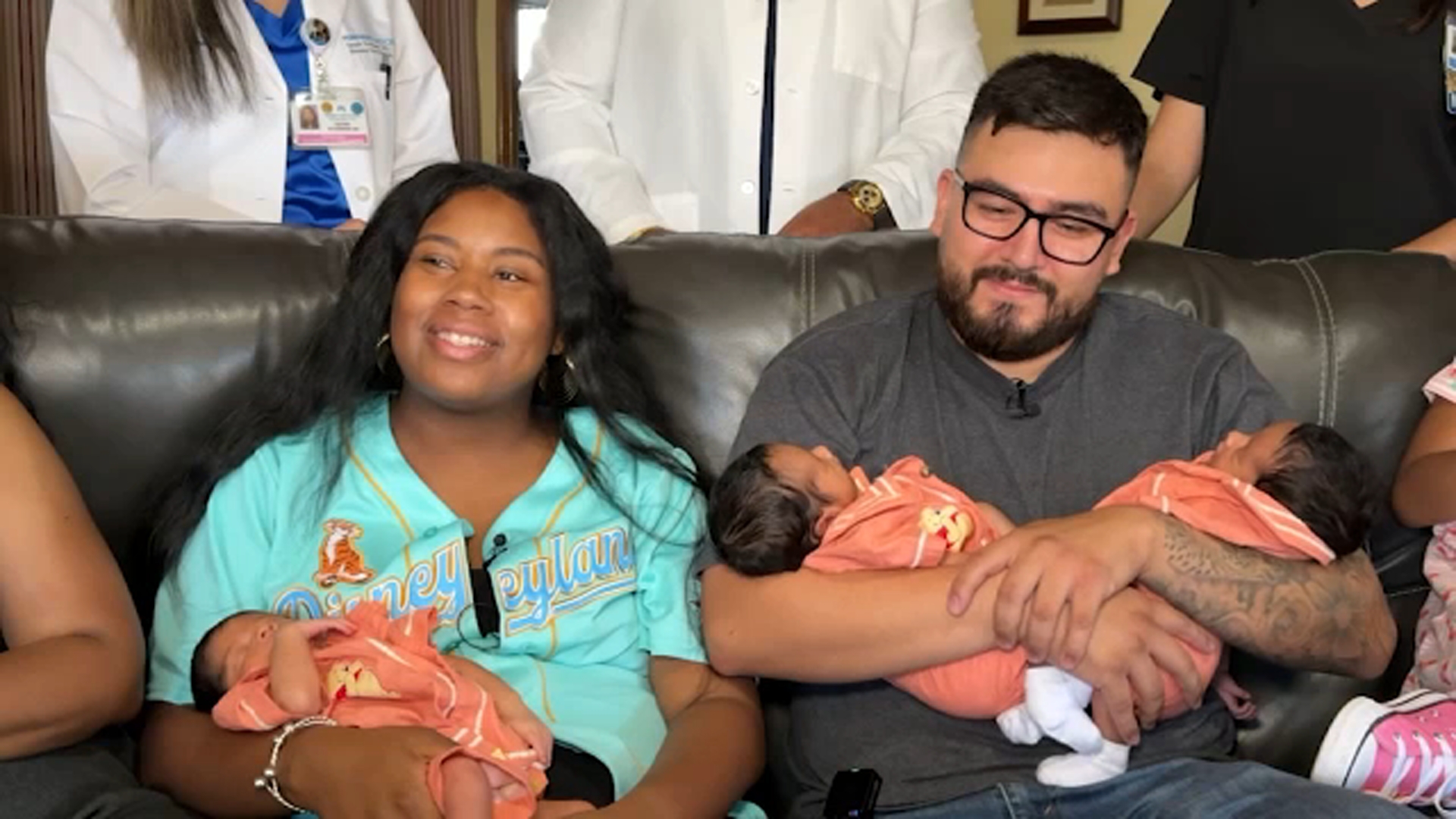
A Southern California family has grown from four to seven overnight after welcoming a rare set of naturally conceived triplets, a pregnancy that medical professionals described as an uncommon occurrence.
Nyla Craft said she first learned she was expecting triplets during a doctor's appointment earlier this year.
"Earlier this year, I went to the doctor and I saw like two different sets," she said. "I was like, 'Oh my goodness, I'm having twins.' And she was like, 'No, there's three.' And I was like, 'Oh my gosh, triplets.'"
Craft said there is a family history of multiples.
"My mom's a twin, and there are triplets in the family," she said. "They're all boys as well. So it skipped a few, but it came to me."
Her husband, Marco Bernal, recalled his reaction to the news.
"I was like, freaking out," Bernal said. "I was like, we have two right now. Then five from 2 to 5 was insane, you know?"
The newborns join older sister Naya and older brother Maceo. According to their parents, Naya has eagerly embraced her role as a big sister.
"She's been excited. She wants to come help," Craft said.
Maceo, however, has been less interested in the babies.
The family said they received extensive support from medical staff throughout the pregnancy and delivery.
"Amazing care. Everyone was just so caring and, you know, making sure I was OK," Craft said.
Quynh Vo-Hanser of Kaiser Permanente South Bay said the pregnancy was especially unusual.
"This is a really rare event," Vo-Hanser said. "This is what we would refer to as mixed triplet. This is a spontaneous pregnancy, which meant that it was achieved naturally. And within this triplet set, there's an identical twin set, and then the fraternal sibling."
Vo-Hanser emphasized the rarity of the birth.
"Within the United States, there's 3.5 million deliveries and about 2,400 are triplets. And even more rare than that are these special triplets," she said.
"The other thing is that they're all the same sex. I have never seen this, all these conditions within the triplet, in my three decades."
Gina Renteria, chief nurse executive, said the delivery required a significantly larger medical team than a typical birth.
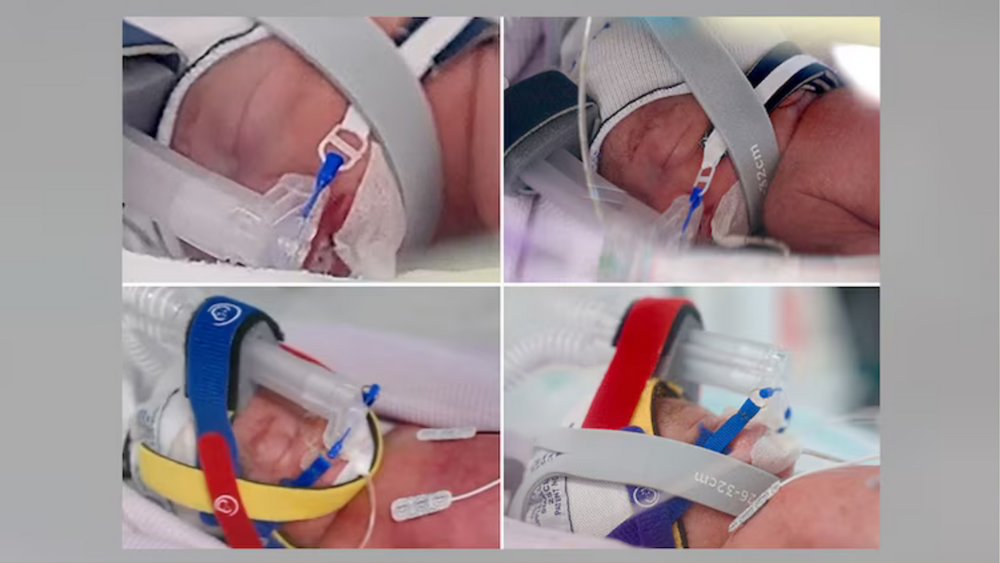
"We had three NICU nurses, one for each of the babies. We had two doctors for the babies, doctors for the mom, an extra nurse for the mom," Renteria said. "There were about 15 people in the delivery room when we normally have about five."
Dr. Rohit Passi, chief of neonatology at Kaiser Permanente South Bay, said Craft's care reflected a broader effort to support mothers facing pregnancy-related challenges.
"We know that Black moms have a higher mortality rate and other complications within pregnancy," Passi said. "We adopt a holistic approach and equity lens to really meet patients where they are at in elevating their voices. And Nyla's case is a perfect example of that."
Passi added that Craft's experience was particularly meaningful because of challenges she had faced earlier in life.
"You know, she shared her story of having struggles early on. She wasn't even sure she would be able to become pregnant," he said. "And it's our job as healthcare providers and as a healthcare organization to elevate their voices, particularly of moms like Nyla, because they are truly inspirational."
For Bernal, the arrival of the triplets also carries a personal significance.
"How can you forget your kids' birthdays if they're on your birthday, you know?" he said.
Craft said she is grateful for the family she now has.