What is the DNA testing technique allowed in the Gilgo Beach murder trial?


NEW YORK CITY (WABC) -- Last week, a judge made a major ruling in the case against alleged Gilgo Beach serial killer Rex Heuermann, allowing DNA evidence obtained on several of his alleged victims to be used at trial.
The evidence had been challenged by defense attorneys because the method used to obtain it has not been tested in a New York court.
Now the method could be used in other cases.
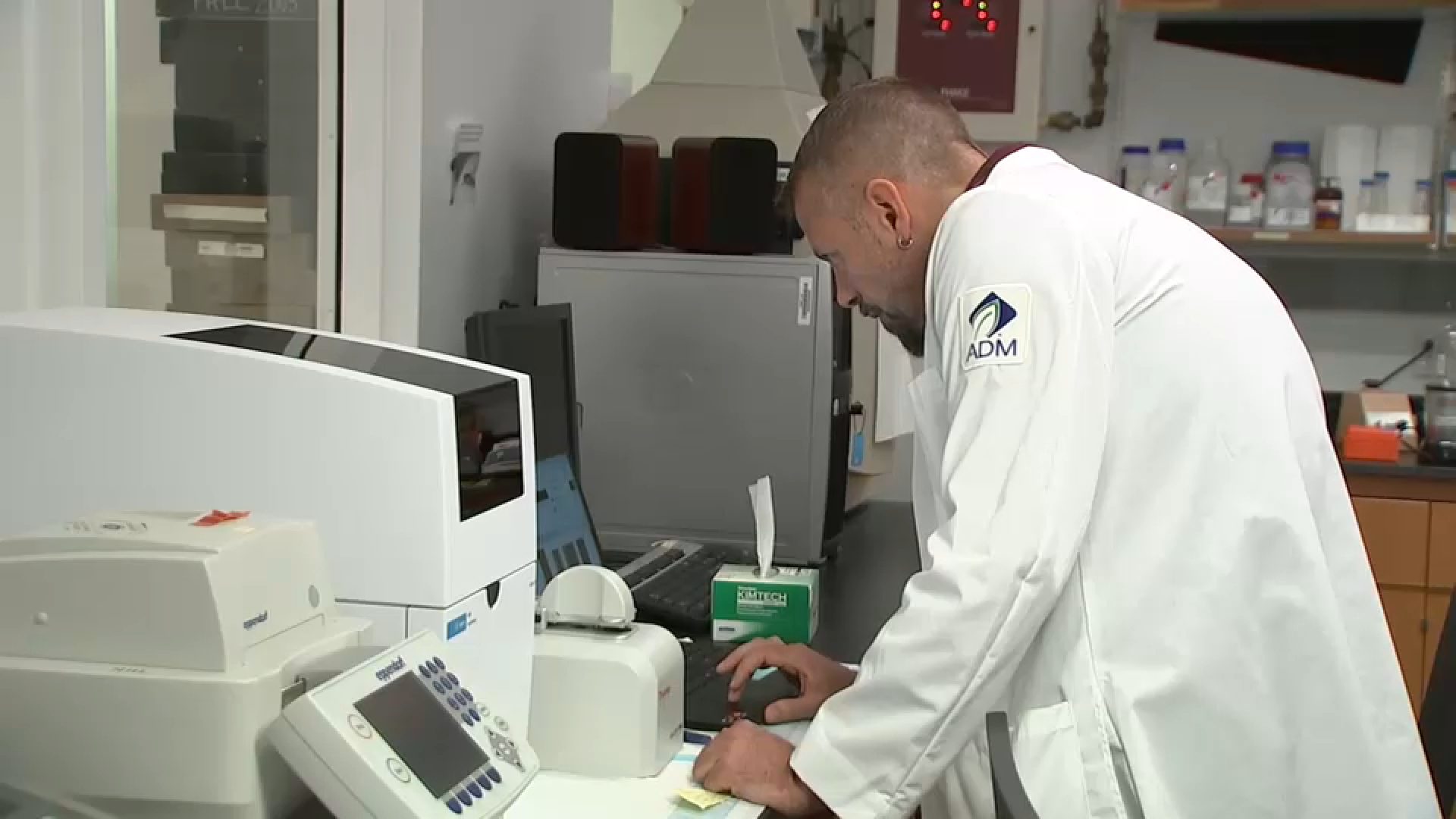
John Jay College of Criminal Justice studies genetic variations among individuals which is a vital tool used by scientists on evidence gathered from crime scenes.
For the Gilgo Beach murders, it's different because for the first time in New York state history, a Suffolk County judge is allowing a technologically advanced DNA testing technique called 'Whole Genome Sequencing' into a murder trial.
"It's very effective especially if we get lots and lots of markers, we can get a profile that is 100% unique to a certain individual," Nathan H. Lents Professor of Biology at John Jay College of Criminal Justice said.
John Jay Biology professor Nathan Lents runs his own DNA research lab.
"The question that's really at play here is how unique are these pieces of DNA that we were able to recover. How do we know, for example, that it only could have come from Rex Heuermann?" Lents said.
That is exactly what Heuermann's defense team argued in court as an attempt to throw out all DNA evidence using whole genome sequencing to link the estranged Massapequa husband and father to six of the seven murders.
The defense also argued that there is not enough proof of a match from his hairs found on the victims decades-old skeletal remains.
"If you get a hair with a root, you're going to get a full regular profile, with a cut hair or chunks of hair that don't have the root, we call those rootless hairs, there's much less DNA," Lents said.
Suffolk County District Attorney Ray Tierney sided with the judge in saying there is enough DNA evidence.
"This is really the first time that we're using just this technology," Suffolk County District Attorney Ray Tierney said.
Prosecutors argued that whole genome sequencing was already allowed in court in Idaho for a cold case murder trial.
"The fact that it was a cold case is really a good example of the power of this technology," Lents said.
Suffolk County Judge Timothy Mazzie's ruling could pave the way for more modern technology in the courts moving forward.
"With regards to Suffolk County, we've started our cold case unit, we're looking at... approximately about 300 or so cold cases," Tierney said.
With all of the evidence in this case, Rex Heuermann's trial could start almost three years after his arrest, which would be next year.
* Get Eyewitness News Delivered
* Download the abc7NY app for breaking news alerts
Submit a tip or story idea to Eyewitness News
Have a breaking news tip or an idea for a story we should cover? Send it to Eyewitness News using the form below. If attaching a video or photo, terms of use apply.