Carriage horse died after eating poisonous plant in Central Park, report finds

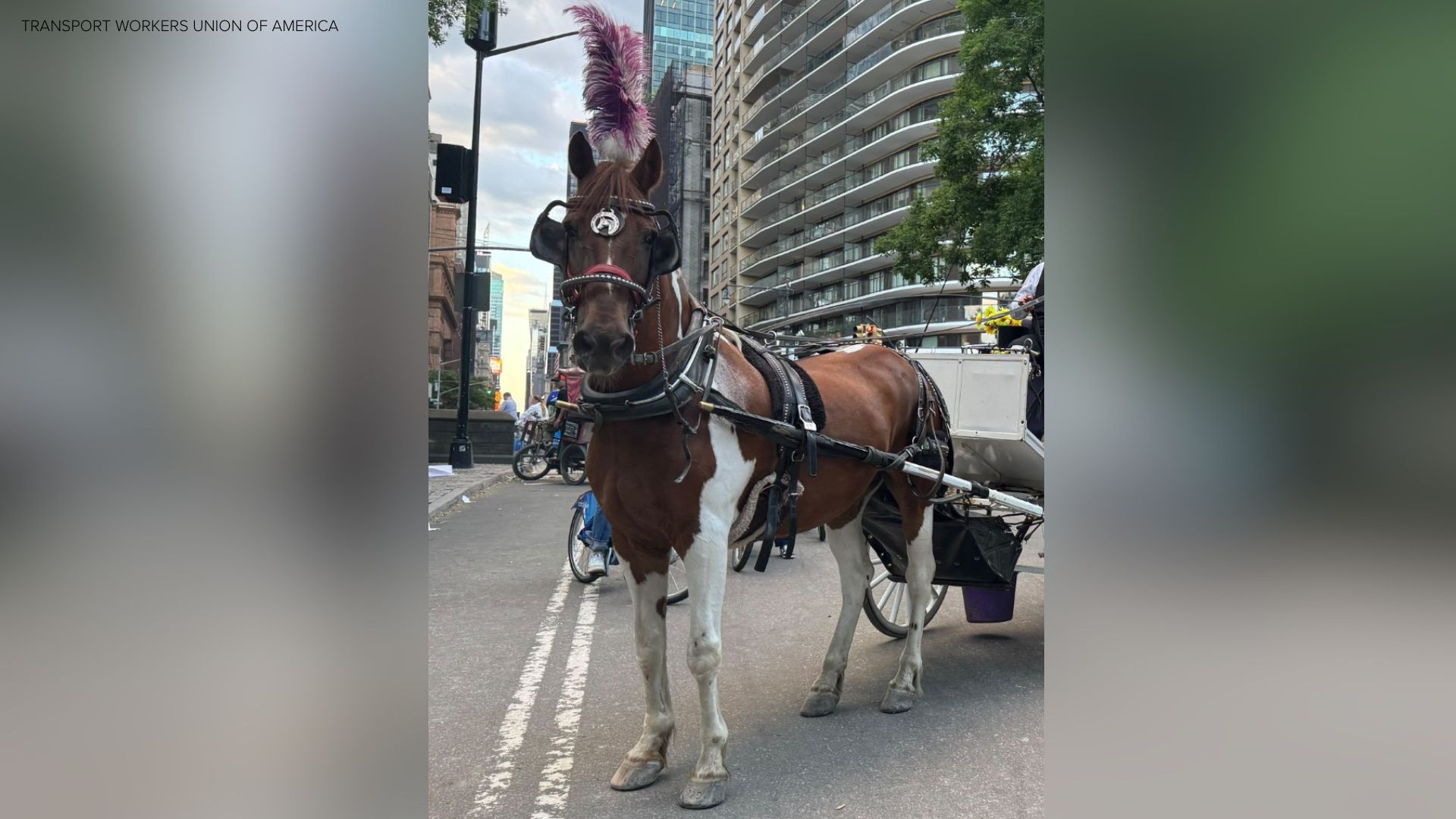
NEW YORK (WABC) -- The death of a carriage horse earlier this month in Central Park was caused by a nonnative toxic plant, according to a necropsy publicized by the union representing carriage drivers.
According to the Transport Workers Union of America, the horse, Deniz, was giving a ride near East 90th Street on June 10 when it paused to eat a shrub along the curb. A short time later, the horse collapsed and died.
The plant is a Japanese yew, an ornamental that is toxic and deadly to horses, according to the necropsy performed by Cornell University's College of Veterinary Medicine. Yew contains a toxic that can send a horse and other animals into cardiac arrest.
The union is using the necropsy to counter calls by activists and the Central Park Conservancy to ban carriage horses due to how they're treated.
"Deniz's tragic death was not caused by neglect or abuse or the fact he was a carriage horse - as some animal rights activists and elected officials claimed," TWU's Alexander Kemp said. "Poor Deniz died because the people running the Park Conservancy never warned anyone that there were deadly yew plants in the park. This is negligence at the highest level of the Conservancy."
The Central Park Conservancy pushed back Tuesday against the TWU's accusations and argued in a statement that the union's "negligence" resulted in the horse's death.
The conservancy noted that horses are prohibited by city law from eating any vegetation anywhere in the Central Park.
"The same rule requires carriage drivers and operators to attend to their horses at all times in order to keep them safe and healthy. Perhaps if they had, Deniz would not have suffered as he did, and died," the Central Park Conservancy said in a statement.
The horse's owner says he is devastated by the animal's death and the allegations that followed.
"Many people blaming us before knowing the truth, people shout at colleagues... and embarrassed us in front of our customers," said Deniz's owner Nurettin Kirbiyik.
The union that represents the horse carriage drivers said they don't just want an apology, they want a safer park for their horses.
"To find out that over the last however many years, toxic plants have been planted in the park where our horses or police horses or parks department horses or riding horses could easily access them, when a single mouthful is enough to stop a horse's heart and kill them, it's just shocking to me," said Christina Hansen with TWU 100.
There have been seven carriage horse related incidents in the last 13 months within the park's vicinity, including one in January where a horse dashed into traffic and crashed into cars, according to the Central Park Conservancy.
Some animal activist groups, like PETA, have long protested horse-drawn carriage rides in the park, arguing that the animals are put in danger because of nearby car traffic and forced to work in poor conditions, especially in extreme weather.
Deniz had passed a physical exam conducted by the NYPD's Mounted Unit veterinarian in March, according to the TWU.
(ABC News contributed to this report.)
----------
* Get Eyewitness News Delivered
* Download the abc7NY app for breaking news alerts
* Download our connected TV app
Submit a tip or story idea to Eyewitness News
Have a breaking news tip or an idea for a story we should cover? Send it to Eyewitness News using the form below. If attaching a video or photo, terms of use apply.